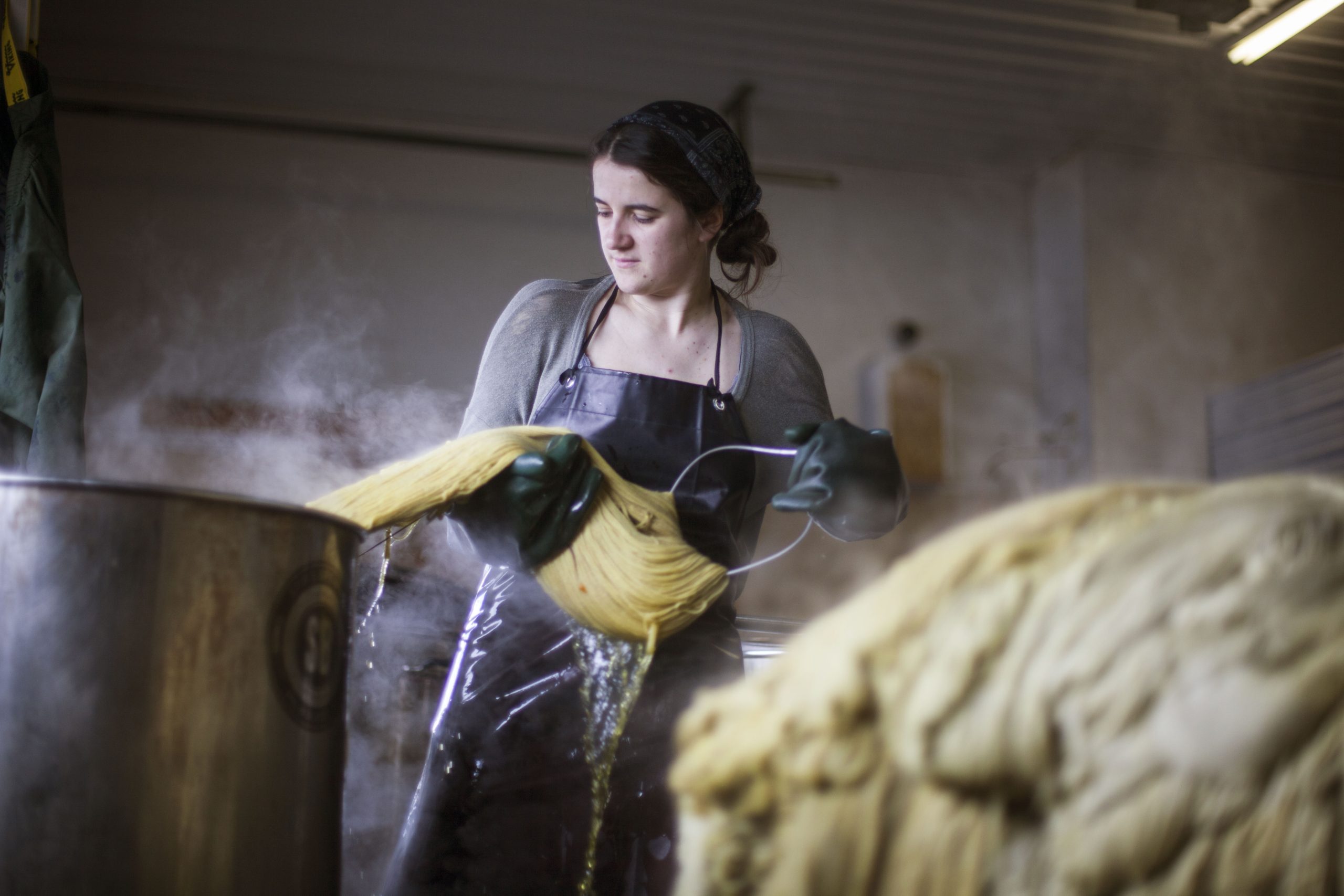
Pictured Above: Winona Quigley working in her studio. Photo via Green Matters Natural Dye Company. Photo Credit: Contributed.
Inside the Women-Run Dye House: Winona Quigley’s Plant-Based Alternative to Fast Fashion
By: Jasmine Spero
In her latest article, writer Jasmine Spero explores Green Matters Natural Dye Company, a women-run dye house in Lancaster County where founder Winona Quigley combines repurposed machinery, rainwater harvesting, and botanical dyes to offer a circular, plant-based alternative to fast fashion’s environmental footprint.
While studying fashion design at Parsons and living in New York City, Winona Quigley was drawn in by the glamour of the industry––until the 2013 Rana Plaza collapse forced her to reckon with its human and environmental cost.
“I was grasping all of these really upsetting facts while asking, ‘What does it mean to make clothing in a small radius?’,” she said.
The question eventually led her to open Green Matters Natural Dye Company in Lancaster in 2015, finding that the region’s agricultural landscape could support the work a dye house requires.
The women-run company operates out of a converted dairy barn, where a 60,000-gallon rainwater cistern helps supply the water-intensive dye process.
“I really did believe that plant-based dyeing could be something that not only addressed the pollution element of textile processing, but also could be done at a commercial scale here in Pennsylvania,” Quigley said.
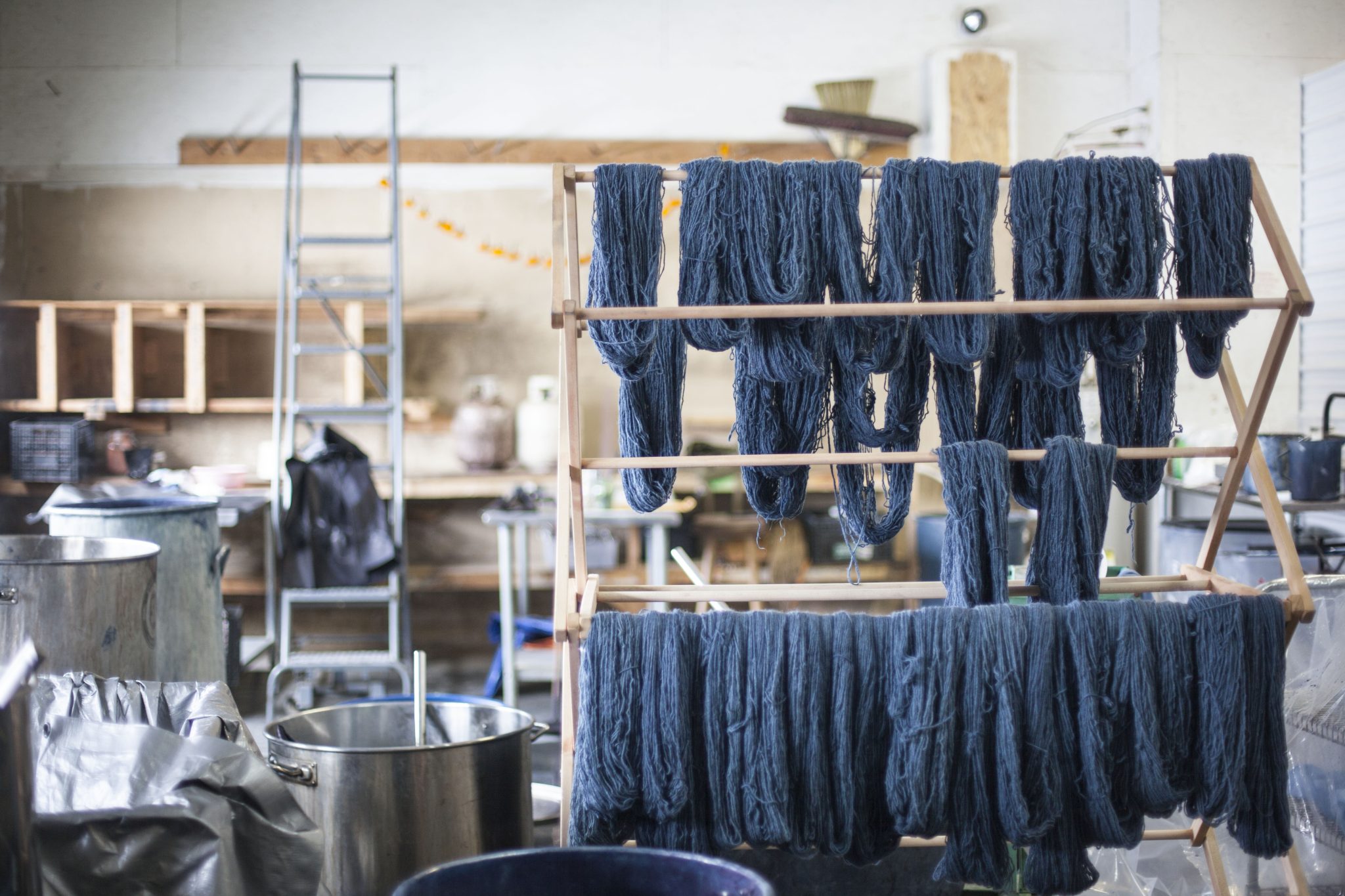
Pictured Above: Indigo-dyed yarn drying inside the Green Matters studio. Photo by Winona Quigley.
For the first seven years, Green Matters functioned as a business-to-businesss dye house, processing commercial orders for fashion brands. American Trench, a luxury menswear label based in Ardmore, Pennsylvania, sends garments to Green Matters for natural dyeing before selling them online and in stores.
However, Quigly kept receiving emails from individuals asking if she could re-dye a single garment.
“Clearly, I have people who want their individual garments dyed. How can I do that without losing money?,” Quigly asked.
She introduced a circular re-dye service to bridge the gap.
By offering three curated colors each month, the studio aggregates hundreds of personal items, allowing them to run full machine loads while keeping clothing out of landfills.
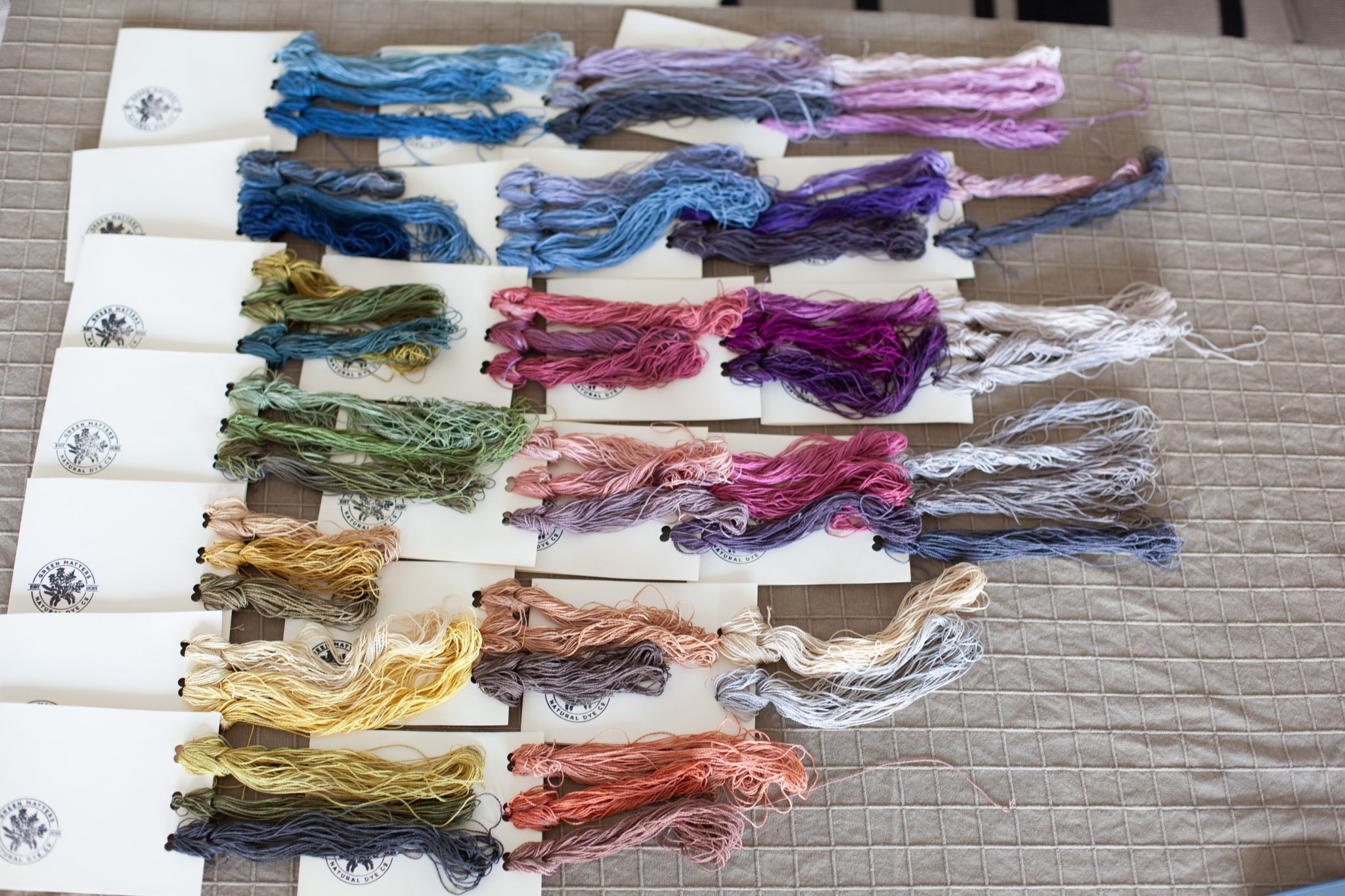
Pictured Above: Natural Dye color swatched on display. Photo by Winona Quigley.
“You don’t have to go buy 10 new garments so that you look like the women on Pinterest, you probably already have it, and you just need to hem it, take it in, re-dye it, repair it,” Quigley said.
Extending a garment’s lifecycle requires shifting away from synthetic uniformity and moving toward natural variation.
“It’s kind of like winemaking––the first bottle from a particular vine and the last bottle of its harvest season are going to taste totally different,” said Quigly. Working alongside those natural rhythms requires a business model built on adaptability.
Rather than chasing maximum profit, Quigley built an operation centered on community impact.
“Green Matters doesn’t necessarily make a lot of profit,” Quigly said, “It is a business model that’s able to support our overhead and support our team. That’s what’s important to us.”
 Independent Arts News Reporting