Independent Arts News Reporting
 New Michener Art Museum Exhibition Reveals the Unexpected Side of Pennsylvania Impressionism: Delaware Valley Quarries and Industry
Reported on Tuesday, September 1, 2026.
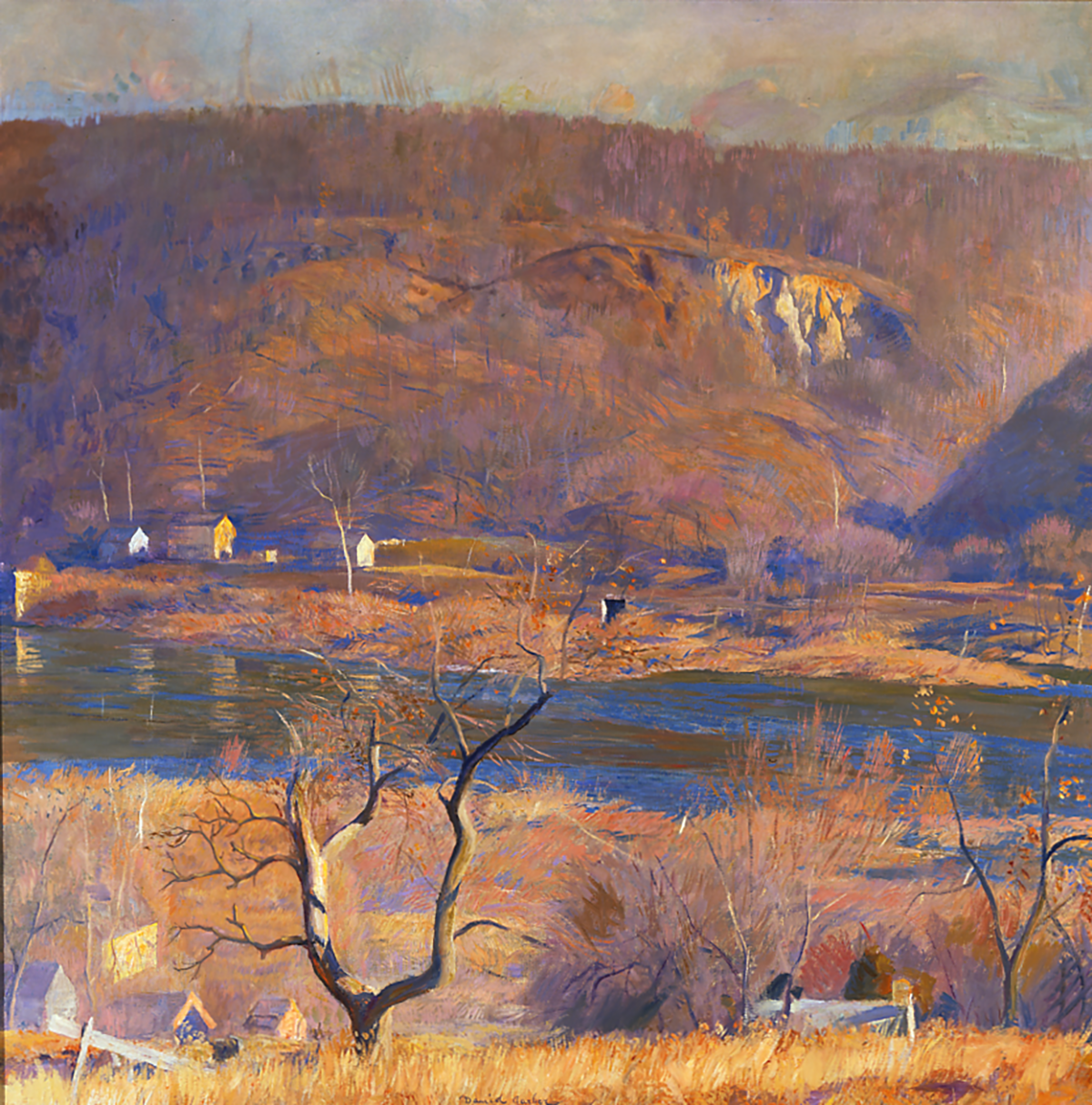
Pictured Above: 1996-14-1 Garber Over at Byram archiva. Photo Credit: Contributed
NEWSROOM POST: DOYLESTOWN, PENNSYLVANIA
Abstractions of Nature: Quarries and Industry in Pennsylvania Impressionism features the “poetic charm” of quarries in paintings by Daniel Garber, Charles Rosen, and more New Hope School artists
Doylestown, PA — While rural landscapes are the hallmark of Pennsylvania Impressionism, these artists also gave unusual attention to local quarries and factories in their paintings. The new exhibition Abstractions of Nature: Quarries and Industry in Pennsylvania Impressionism at Michener Art Museum reveals this unexpected fascination from Daniel Garber, Charles Rosen, and others who lived through a time of industrial transformation in the greater Delaware Valley.
Opening Labor Day weekend on Saturday, September 5, 2026, and on view through Sunday, February 28, 2027, Abstractions of Nature explores how the biggest names of the New Hope School found new possibilities in their landscape paintings thanks to industrial sites. Fourteen artists are represented in works from the first half of the 20th century, including William Lathrop, Letitia Maxwell Ely, Roy C. Nuse, Edward Redfield, Bernard Badura, Walter Baum, George Sotter, R.A.D. Miller, Arthur Meltzer, and John Folinsbee. Some are loans from private collections that are rarely on public view.
Active quarries have been a part of Bucks County’s industry for centuries, mining deposits like Buckingham Valley, a narrow band of limestone and dolomite rock that extends southwest from Center Bridge, Penn., to the outskirts of Doylestown. Major Bucks County artists either portrayed quarries as part of the landscape and edited out any marker of active industry, or celebrated quarries at work by intentionally integrating workers and machinery within their compositions.
“Pennsylvania Impressionists depicted quarries as integrated components of the natural world,” said the Gerry and Marguerite Lenfest Chief Curator Laura Igoe. “They became part of the landscape for artists, providing structure, scale, and light. When you’re painting rolling scenes along the Delaware on canvas, quarries give a moment of drama.”
Daniel Garber, who was drawn to painting quarries after the success of The Hills of Byram that launched his career in 1909, praised the quarries along the Delaware River as giving “you things like the Grand Canyon but on a scale commensurate with the canvas.” He repeatedly painted the scene, overlooking Byram from Point Pleasant, throughout his life.
Also on view by Garber is a rare charcoal study, Abandoned Quarry, for a painting Garber ultimately judged a failure and destroyed. He investigated the subject of quarries across media, from painting to drawing to etchings, with an unusual 1925 etching titled Harmonville on view in the exhibition. The etching is a pointed critique of industrialization, uncustomary for Garber, with factory chimneys billowing smoke and a dying tree in the foreground. Meanwhile, for many regional artists, the smoke from factories or steel mills was an opportunity to embrace the moody effects of air pollution or the geometry of factory architecture.
Garber displayed the Harmonville painting on which the etching is based at the 1926 Sesquicentennial International Exposition in Philadelphia, where in contrast, his monumental A Wooded Watershed mural was debuted as a showcase of Pennsylvania’s natural resources. Abstractions of Nature marks the 100th anniversary of A Wooded Watershed, on view as a focal point of Michener Art Museum’s permanent collection, while Garber destroyed his Harmonville painting after 1931.
Abstractions of Nature: Quarries and Industry in Pennsylvania Impressionism is presented through the generosity of Rebecca Bushnell & John Toner and the Byers Family, with additional support from M&T Charitable Foundation and the Michener Art Museum’s Business Partners.
Related Programming for Abstractions of Nature: Quarries and Industry in Pennsylvania Impressionism on view Saturday, September 5, 2026—Sunday, February 28, 2027:
Members’ Exhibition Opening Reception
Thursday, September 3 / 5–6:30 p.m.
Free for Members / RSVP Required
Unplugged Family Day: Cut-and-Collage Landscapes
Sunday, September 13 / 1–2 p.m. or 2–3 p.m.
Free Admission / Pre-Registration Required
Beyond Words Book Club: Land by Maggie O’Farrell
Daytime: Thursday, November 5 / 1–2:30 p.m.
Evening: Thursday, December 10 / 6:30–8 p.m.
$10 Members / $22 Non-Members
The Art of Response: Ekphrastic Writing
Wednesday, November 12 / 1–3 p.m.
$10 Members / $22 Non-Members
Abstractions of Nature: Quarries and Industry in Pennsylvania Impressionism: A virtual program with Laura Igoe, Gerry and Marguerite Lenfest Chief Curator
Tuesday, November 17 / 7–8 p.m.
Pay What You Wish (Friend: Free; Supporter: $10; Benefactor: $20)
Free Second Sundays
Free admission on the following Second Sundays includes access to Abstractions of Nature: Quarries and Industry in Pennsylvania Impressionism. Admission is free at Michener Art Museum on the second Sunday of the month through Sunday, December 13, 2026 with support from Art Bridges Foundation.
Sunday, September 13 • 12–5 p.m.
Sunday, October 11 • 12–5 p.m.
Sunday, November 8 • 12–5 p.m.
Sunday, December 13 • 12–5 p.m.
About Michener Art Museum
Address: 138 South Pine Street, Doylestown PA 18901
Website: michenerartmuseum.org
Hours: Wednesday–Saturday, 10 a.m.–5 p.m. and Sunday, 12–5 p.m.
Holiday Hours: The Museum is closed for Thanksgiving Day on Thursday, November 26, but open on Friday, November 27. The Museum is closed for Christmas Day on Friday, December 25, but open Thursday, December 24, Saturday, December 26 and Sunday, December 27. The Museum is closed for New Year’s Day on Friday, January 1, but open on Thursday, December 31 for New Year’s Eve.
Michener Art Museum is dedicated to preserving, interpreting, and exhibiting the art and cultural heritage of the Delaware Valley region. The Museum is named for Doylestown’s most famous son James A. Michener, a Pulitzer Prize-winning writer and supporter of the arts. Home to a world-class collection of Pennsylvania Impressionist paintings and a permanent collection that explores a variety of artistic expressions, the Michener has a reputation for its craft holdings, which includes the Nakashima Reading Room. The Museum is housed on the site of the 1884 Bucks County Jail and is surrounded by the original prison walls, now part of the Patricia D. Pfundt Sculpture Garden. Michener Art Museum offers wide-ranging programming that nurtures a lifelong involvement in the arts, with rotating special exhibitions, artist conversations and studio tours, gallery talks, the Putman Arts Leader Lecture series, as well as dance and music performances.