Independent Arts News Reporting
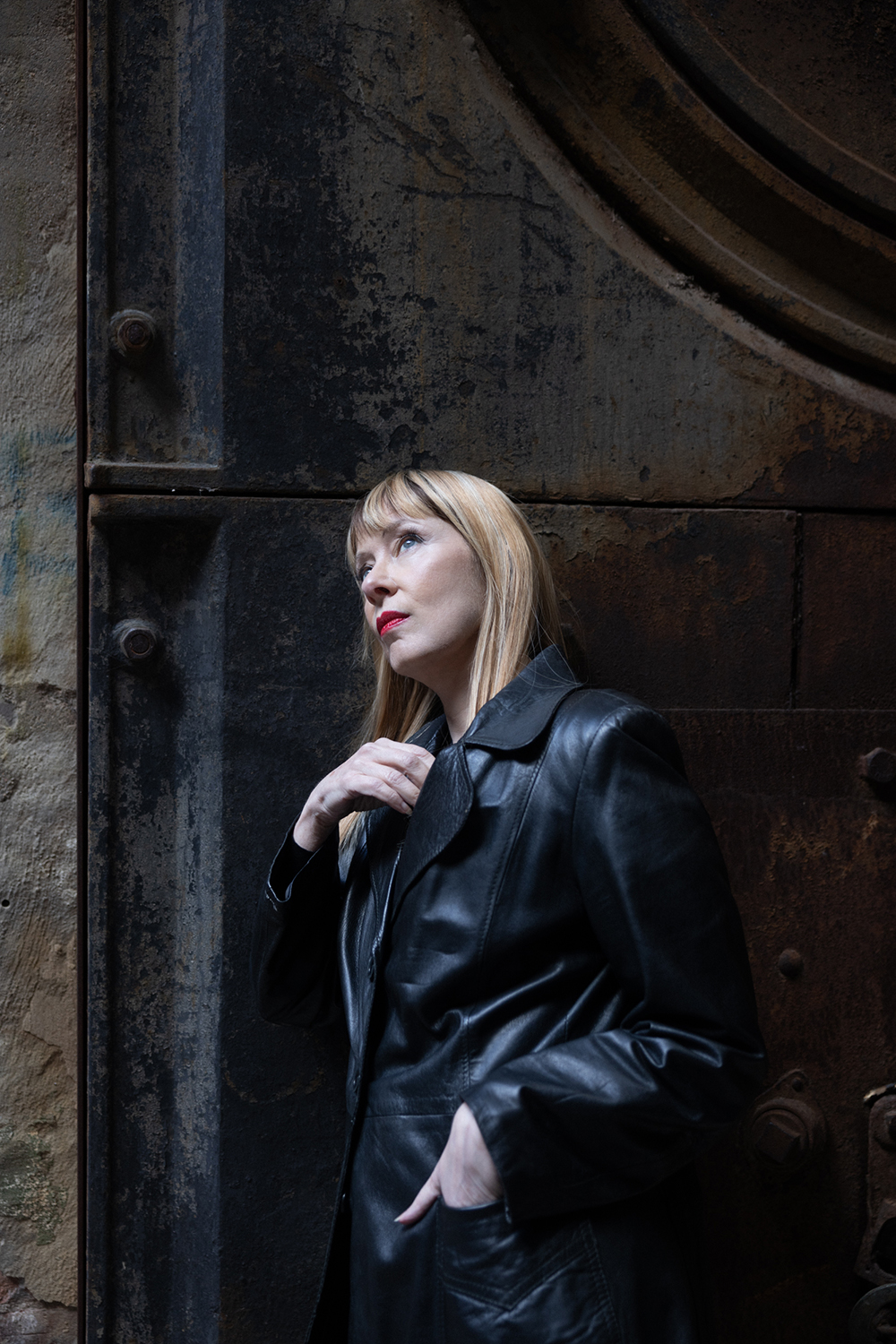
Pictured Above: Suzanne Vega. Photo Credit: Ebru Yildiz.
Suzanne Vega: Her New Album, "Flying with Angels," Soars Above Earthbound Struggles
By: Lori Goldstein
As acclaimed singer-songwriter Suzanne Vega prepares to bring her Flying with Angels tour to McCarter Theatre in Princeton on November 6, she sits down with Arts News Now Music Writer, Lori Goldstein for a candid conversation about music, resilience, and the art of storytelling. From the enduring influence of Lou Reed to the deeply personal inspirations behind her latest album, Vega reflects on four decades of songwriting, creative evolution, and finding beauty and meaning in an ever-changing world.
Singer-songwriter Suzanne Vega had issued her eponymous record debut when she first met the iconic Lou Reed. He interviewed her for the MTV show 120 Minutes, about a Greenpeace benefit concert for which she was performing. That was back in 1986, and he challenged her to “write more real songs.” Heeding his advice, a year later she penned the worldwide hit Luka, the story of a boy physically abused by his parent. Decades later Vega would reveal the truth, the story was real: she herself was a victim of her stepfather’s abuse. A resilient survivor in love with New York City, where she grew up and lives, Vega has spent the past four decades as a highly literate lyricist (she majored in English at Barnard), creating music that rivals the best of Bob Dylan and Leonard Cohen.
Nowadays Vega is on tour for her tenth studio album, Flying with Angels, which was released in May of 2025. Just about two weeks before her November 6 performance at Princeton’s McCarter Theatre, I had the opportunity to have a conversation with her by cellphone, during which she was candid about many things personal, political, and poetic.
You’ve spoken about how during your childhood, when you saw the spotlight on a stage, you knew you wanted to be in that spotlight. What did that spotlight mean to you then, and what are you enjoying about being in the spotlight now?
Probably that something special was going to happen, something that could possibly require costumes or something fun like that. I think I was about four. I’ve always been drawn to situations where you can pretend to be somebody else, or I had some idea that that’s what might happen on a stage, because I don’t remember having seen a stage before that. I just thought I’d like to stand in that light and possibly do something, sing or dance or wear costumes and makeup. I studied dance for many years and also theater in college. I think I studied lots of different kinds of things that happen on a stage. These days I really enjoy the whole thing—I enjoy being on tour, the makeup and choosing what to wear for the evening, the staging. My shows are slightly more staged than they used to be. I used to just stand at the microphone and sing. I move around a little bit more, because over the years when we did Tom’s Diner at a festival, to get the audience going I would walk from one side of the stage to the other. I’ve sort of worked that into my regular show. It’s not fancy staging, but it’s a different approach to how I once did it.
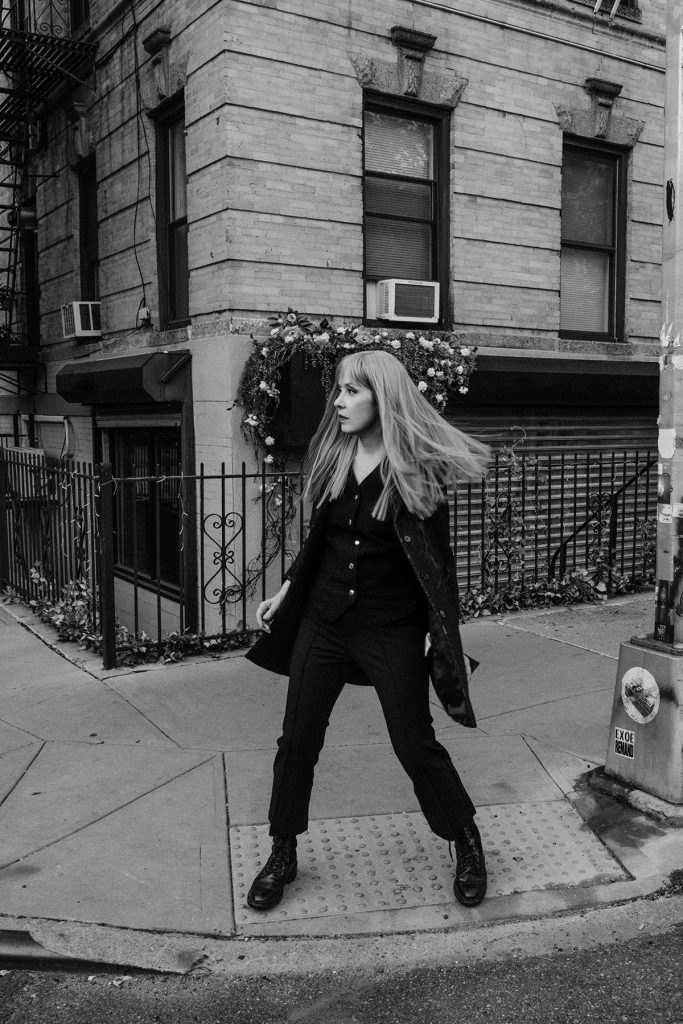
Pictured Above: Suzanne Vega. Photo Credit: Ebru Yildiz.
You’ve said that each song on the album takes place in an atmosphere of struggle. Can you talk about which songs exemplify your own personal struggles or those of people close to you?
Well, Speakers’ Corner, the root of it is that someone very close to me, my husband Paul Mills, had a series of strokes that left him literally unable to speak and he’s had to learn to speak again from the beginning. So there’s that, which is of course very personal. But there’s also this idea in society right now of the First Amendment and people’s right to speak, and the sanctity of the speakers’ corner, which is under great strain. This wasn’t particularly true when I wrote this song, I wrote the song before the election, but it’s been hacked away at for the last ten years or so. [The song] started off as a kind of meditation on someone who is learning to speak again–ironically Paul is a trial lawyer whose specialty is free speech. He defended a lot of protesters in Occupy Wall Street, Black Lives Matter. So it’s a meditation on all kinds of speech.
Some of the songs address the harsh realities of our times. I’m thinking of Last Train from Mariupol in particular. What was the catalyst for this song and why did you want to write it?
I do not have a personal relationship with Ukraine. I’m not Ukrainian, I don’t have relatives there. I wrote it just because I was watching the news every night. This happened during the pandemic. For a while it was the lead story every night at 6:00. We would see this invasion taking place, and it was stunning, it made me feel complicit somehow that we as Americans were watching this. It was all happening in slow motion and we couldn’t seem to do anything about it. So it was written from clips from what I saw on the news and what I read in the newspaper. There is no literal last train from Mariupol. God himself had fled, because he was frightened by what he was seeing, and so I put him on the train. I thought that was interesting to have him fleeing with all these other people on the train. It reduces him down to someone just running for their lives.
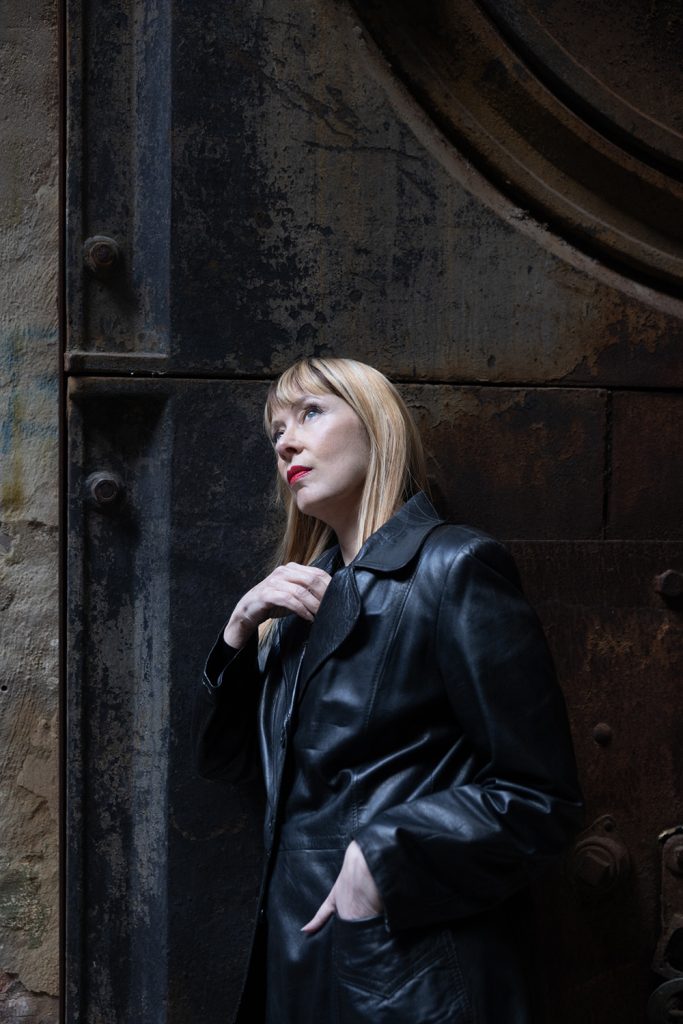
Pictured Above: Suzanne Vega. Photo Credit: Ebru Yildiz.
You’ve described your writing process as a kind of “chaotic desperation,” and yet the result is a beautifully cohesive album anchored by the title track, Flying with Angels, along with Love Thief, and a song that’s my favorite, Alley, with its images of Chagall’s floating lovers. I see a dichotomy between ethereal songs and more earthbound tracks. If it wasn’t intentional, do you think your subconscious was driving it?
I do think my subconscious was driving it. When it was all done, I could look at it and see the cohesiveness, and I could see that really this album contains all the world, all the beings—it runs the gamut from rats [the title and subject of the ninth track] to angels. You know the rats are real, we have plenty of them in New York and they’ve been adversaries for a long time. If you’ve grown up in any of the bad neighborhoods in New York, you know all about the rats. And then you have these various fields of being that you can play with and the angels I guess are up at the top. So there’s this wish in Alley to rise above the alleys where rats are commonly found, there’s this great desire to be up with the angels instead of down here with the rats. And I think maybe I’m expressing something that’s in the air, maybe people are longing for a better way of being because we’ve been mired for a while now in this world with no ideals. Privately we all have our ideals and we’re still striving to live a good life and be a good person, but we don’t see it as much in society. The interesting thing is that I finished the album in December 2024, and I had just finished the last lyrics, of Alley, the week of the election. I finished it before Trump actually took office, so some of the album seems to reflect [the sentiment that] Witch has as part of its chorus, “we’re living in a state of a permanent emergency.” Who could have imagined that our president was going to be constantly calling a state of emergency so that he could duck the rule of law? It became literally true.
You had this 11-year span between Flying with Angels and your previous album of original songs. What occupied you during that time period?
What I was doing was mostly theater. It was 2011 when I did the first theatrical production [about the life of Southern writer Carson McCullers, best known for her debut novel, The Heart Is a Lonely Hunter]. And then I wasn’t happy or satisfied with that, so we did a second theatrical production in 2018. In between the two theatrical productions I was workshopping it and doing other things, touring, and I did the album for it, Lover, Beloved. I managed to put out another album of original songs in 2014, Tales from the Realm of the Queen of Pentacles. So in 2019 I was thinking, great, I’ve done a film, the film’s finished, now I can work on making a new album. I turned around to start working in 2020, and of course instead we walked right into the pandemic. A lot of time to reflect during that time period, the rats were in the news during the pandemic and a lot of the other images…some of the ambulances, a lot of the notes that I took at that time are on the album.
Lou Reed was a friend of yours up until his death in 2013. What did you learn from him, and do you think he’d say you followed his advice with this record? Was he one of your angels?
Lou said you need to write more real songs. Lou had his darker side as you probably know, so was he one of my angels? He was in that he was a truth-teller, and that what he did in his work was very brave and very courageous and he wrote real songs unflinchingly. And so trying to steal a bit of that helped me to write Luka and write other songs that were a bit more real, but I also didn’t want to follow it completely. I like my imaginative side. I like Small Blue Thing and Queen and the Soldier. Even a song like Alley, which has its ethereal side. So I followed it to a degree.
You’ve covered Lou Reed’s Walk on the Wild Side on your 2020 Live at the Café Carlyle album, An Evening of New York Songs and Stories. Have you ever written a song in tribute to Lou Reed?
I haven’t but I’ve thought about it because I miss him, so I think it would be nice to write about him in some way that acknowledged what he meant to me, what I learned from him, observing and just being around him. We had an ongoing friendship which wasn’t exactly consistent, but I would run into him all over the city. I used to be Laurie [Anderson’s] neighbor. I used to live around the corner from her, so I would run into the two of them, and I would run into them at events, and eventually I became friends both with Laurie and Lou, and would go to their summer house, which was more personal. The odd thing about Lou was that I think that only once near the end of our friendship did he ever acknowledge that we had known each other for a long time. He made a comment that I was very straight, which made me laugh, I was like, yeah, well, that’s pretty obvious. And then he said, it’s always been that way, and I thought, well, that’s the first time he’s acknowledged that there’s a history here, because the rest of the time, it was always like whatever happened the last time we saw each other seemed to not exist, and we seemed to be always starting over. It was interesting, he was a fascinating guy.
You pay tribute in this album to two great songwriters: Chambermaid references Bob Dylan’s I Want You and Lucinda is clearly about Lucinda Williams. What music are you listening to now that you find inspirational?
I’ve been a big fan of a band called Fontaines D.C. They seem to be pumping out these albums one or two a year. And they are changing their sound with the times. Some of the albums I love and some of them I’m like, hmm, not sure I like this one. But the guy, Grian, is a terrific writer, and if you look at his lyrics, he’s got such a great turn of phrase. He and the other guys started their band as a band that loved poetry, so you can feel the influence of someone like T.S. Eliot in some of their phrases in their lyrics. But they’re not precious about it either. I think they’re also a good punk band, so Grian, who can be really, really articulate and use these long words and lovely phrases, can also start repeating himself and repeating himself, and then also start shouting and making weird phrases like Aaa, which I think is really funny. I appreciate that about him. He’s kind of brute force in a way, but such a good writer. That’s what I really like about him.
Your daughter Ruby sings with you on Last Train from Mariupol and Alleys. How did Ruby come to sing with you on these two tracks and how would you describe the experience of singing with her?
She did all those harmonies on Alley. I love to hear her sing, and she’s been singing with me since she was about eight or nine. She was on tour with me and one day she said “I’d like to sing background vocals with you on stage” and I was like “Well, sweetie, I don’t know,” you know. I knew she could sing because she’d made a little tape of herself singing show tunes when she was six years old, belting it out like Liza Minelli in the bathtub, so I thought, okay, I know she can sing, but you know, taking her onstage, that’s something else. So I said we’ll try it at the sound check, and we sang Small Blue Thing together, and she did perfect harmonies. She had internalized my phrasing and she knew exactly how I was going to sing the song. She matched me perfectly and she did a perfect third over them and I said, “Wow, okay, you’ve got the job.” So I let her come onstage with me and sing for a while. Eventually she did not like the touring lifestyle and really let me know that. That’s when she discovered sleepaway camp. [Ruby began singing background vocals on Vega’s 2007 album Beauty & Crime as well as several albums in her Close-Up series.]
How would you describe your collaboration with Gerry Leonard, whom I understand worked with David Bowie and Laurie Anderson, among other great artists?
First of all, he’s just a brilliant guitarist, which I noticed right away. I met him back in 2000 when I was working on Songs in Red and Gray. Wow, here’s this brilliant guy who’s also very humble and very approachable. And he said this thing to me, he came up at one point saying, “I can play your parts on the guitar the way you played them.” This was kind of significant because most people don’t understand how I play guitar. I sort of invented my own system, and he was able to do it. But at that time I was playing my guitar, so I said, well, that’s nice, but you know, so what? But then I broke my arm and I could not use my left hand, not even to open a door or hold a glass of water. So I begged him to come on tour with us and play my guitar parts the way I played them. That started our long touring life together, and slowly as times changed, and especially when I started my own record label [Amanuensis Productions], and when I did the Close-Up series, did all the re-records [of songs originally on the A&M and Blue Note Records labels], he was instrumental. So we made all those recordings and they were very popular, and I really enjoyed that whole process. That’s how he started to drift into the role of producer as well. Now that my personal responsibilities have gotten much greater at home, Jerry makes it easy to work. He’ll say, “How are you doing? Are you writing?” So we have writing sessions where I’ll come in with a few ideas—they can be melodic, they can be musical phrases, or they can be a title or an image or just a thought and then we just play records for each other, we play music for each other, and when it becomes solidified, he makes these spreadsheets of all the possibilities, and then we just nudge each thing along. It’s a lovely way to work, he makes it very easy and very safe. I kind of need that right now because as I said, my personal life is crammed with doctor visits, Medicare applications.
You’re considered a pioneer as a female singer-songwriter, as you’ve said, “to the left of Joni Mitchell and to the right of Patti Smith.” Now that you’re firmly established in the zenith of your career, what has stayed the same, and how have you evolved as a vocal artist?
My voice has stayed the same more or less. The timbre of it may have deepened or darkened a bit, but the style is the same. I still have that straight voice, no vibrato, as Lou pointed out. I take lessons now, so I have more range than I did when I was younger. And I think I take more chances. I don’t think I would have had the confidence to write Love Thief and feel that I could really pull it off, say, forty years ago. But it’s the kind of music that I love [Philly soul], and I grew up listening to it, so I was really kind of thrilled that we were able to pull that one off. So I take more chances now, I move around more on stage, I am happier and more comfortable in my own skin, and I think there’s a power that comes from that.
You wouldn’t consider yourself still wed to the folk music genre, would you?
The way I see that is the root is in folk, because the only instrument I play is the acoustic guitar, and there’s the storytelling aspect which of course is very folky, so my root is definitely in folk, but that has never stopped me from ever throwing all those things aside. Even on the first album, a song like Cracking—what is that? Is that folk? There is the acoustic guitar, it’s the first thing you hear, but I’m always happy to lay that aside as a description, but I feel that is part of my character, that folk root is there.
What are your personal favorites on the album?
Oh gosh, I love Alley. I love singing it and I love how it came out. I’m really happy with that one. We had the [guitar] track done before the lyrics were done, and I remember thinking I love this track, I’ve got to figure out what it’s about. I have to go write the song. It took me a while to do it, now it’s one of my faves. I love singing Love Thief, but we don’t do it that often because people seem so surprised by it that it’s a distraction.
Is there anything else you’d like to tell us about the album or about upcoming new projects waiting in the wings?
I’ve been touring the album now for two years. It really is time to come off the road to see what to do next. But I don’t have anything lined up in the wings. I’ve thoroughly enjoyed the last two years, so this is like the last of this Flying with Angels tour. We’re really ending the project in about two weeks, so I’m a bit sad about it because I really enjoyed doing these new songs and people seem to love them. Then I’ll find out what’s going to happen next.
The Flying with Angels show includes songs spanning the entirety of Vega’s career, along with tracks from the new album. She’ll be accompanied by guitarist Gerry Leonard and Stephanie Winters, the cellist who performed with Richie Havens from 2004 to 2013.
As of this writing, a few tickets remain for Suzanne Vega’s November 6 performance at McCarter Theatre, mccarter.org.