Independent Arts News Reporting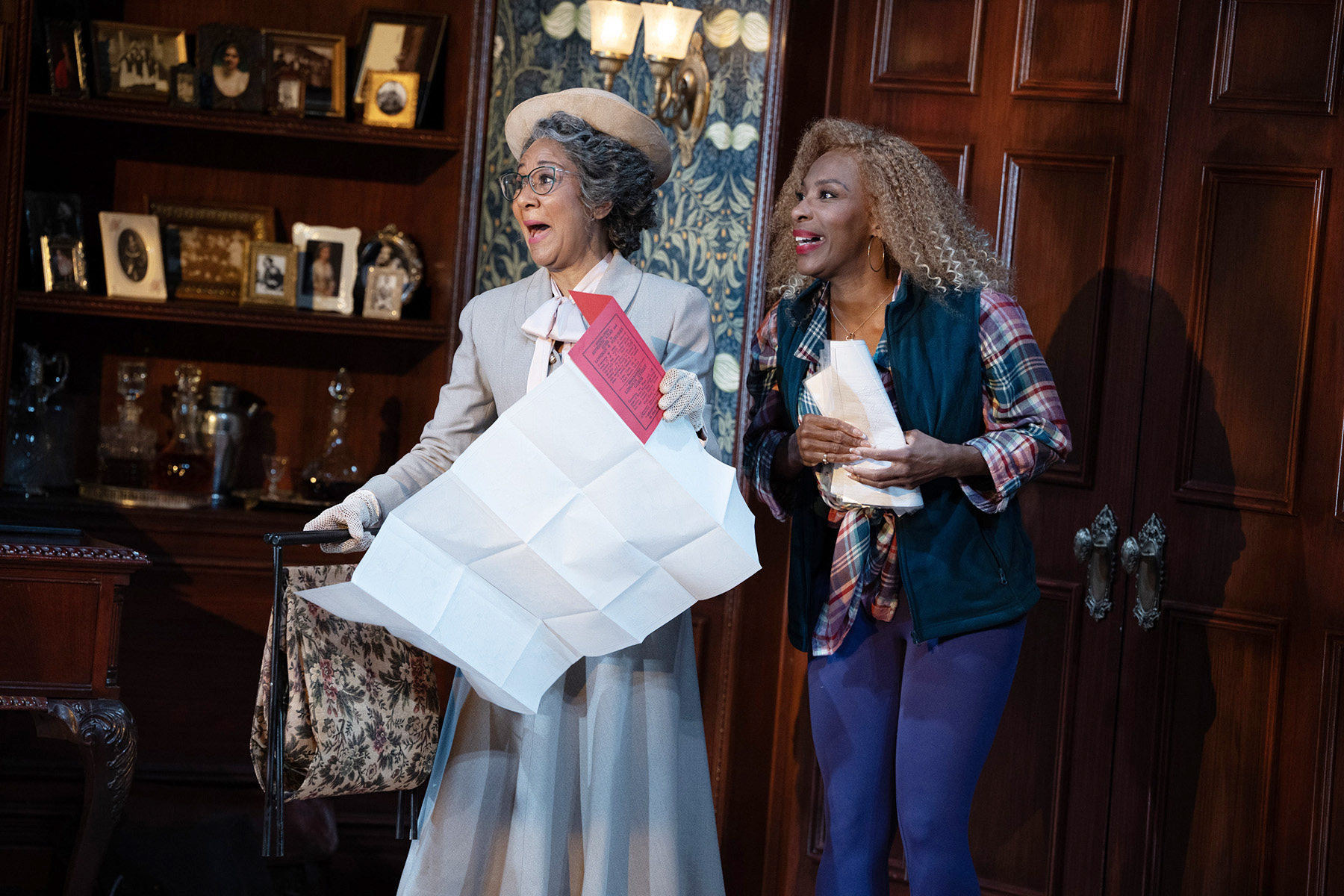
Pictured Above: Gina Daniels and Patrese McClain in Mrs. Christie at McCarter Theatre. Photo Credit: Daniel Rader.
Agatha Christie’s Mysterious Lost Days Uncovered in "Mrs. Christie"
By: Lori Goldstein
One of literature’s greatest unsolved mysteries takes center stage at McCarter Theatre Center in Mrs. Christie, a witty and moving new play inspired by Agatha Christie’s real-life 11-day disappearance in 1926. Arts News Now feature writer Lori Goldstein goes behind the scenes of the production as playwright Heidi Armbruster discusses bringing the famed author’s lost days vividly to life.
After Shakespeare and the Bible, Agatha Christie is the best-selling author of all time. Her 66 mysteries and 14 short story collections are peopled with such beloved sleuths as Hercule Poirot, Miss Marple, and Tommy and Tuppence. Mrs. Christie also became infamous for her 11-day disappearance in 1926, the year she experienced marital conflict and lost her mother. Newspaper headlines and articles detailing the progress of the woman-hunt abounded, yet the author never wrote about this mysterious disappearance in her autobiography.
Playwright Heidi Armbruster employs this significant time warp to tell two parallel stories, the second being that of the modern-day Lucy, an American woman in her late 30s who is grappling with a similar loss and on a personal journey of her own. It’s the year 2026 when Lucy decides that if Agatha could run away from her life, then so can she—to the International Agatha Christie Festival in Torquay, England, the author’s birthplace.

Pictured Above: Heidi Armbruster. Photo Credit: Contributed.
Not coincidentally, Armbruster attended that very Festival in 2015, on the occasion of Christie’s 125th birthday, while she was grieving the loss of her mother. She was the same age as Christie was in 1926: 37. Not having the mindset to read weightier books, Armbruster revisited one of Christie’s novels, which happened to be pre-loaded onto a Nook she’d bought.
She hadn’t read a Christie mystery since middle school, but recalls her favorite teacher assigning And Then There Were None, which she loved so much she had her mom film her, dressed in her dad’s sport coat, giving a fireside chat, with all her Cabbage Patch dolls hanging from the banister and other places in the house to illustrate the mystery’s 10 murders. That mystery typifies what Armbruster calls “champagne nihilism,” where everyone’s supposed to “keep calm, carry on, have drinks before dinner, and don’t get murdered.”
It wasn’t long before Armbruster went down the proverbial rabbit hole and read all of Christie’s works, as well as Lucy Worsley’s biography and Christie’s autobiography. In learning about Christie’s life, Armbruster intuited that from the time the author checked into the Old Swan Hotel in Harrogate, Yorkshire, to when she was discovered there 11 days later, she was “ready to become an icon. Whatever happened in those 11 days was somehow transformational. And I think I went to the Christie Festival looking for some kind of transformative experience, some kind of chrysalis experience for myself. And of course, it wasn’t there. That didn’t exist, because you can’t just go find that. And so there was tension about what my expectations were in this pilgrimage with my secular saint Agatha.”
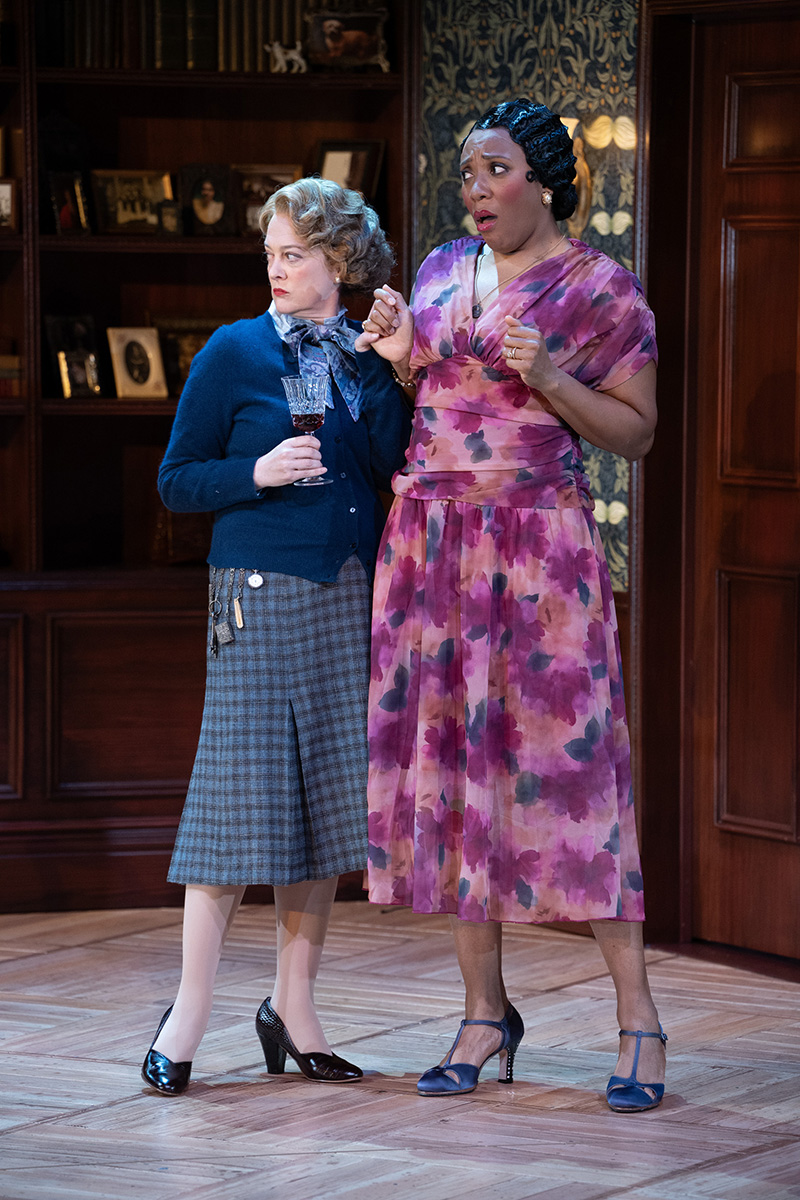
Pictured Above: Polly Lee and Christiana Clark in Mrs. Christie at McCarter Theatre. Photo Credit: Daniel Rader.
While her fellow festival attendants did nothing to inspire Armbruster, walking in Christie’s Torquay–the Devon landscape with its cobblestones, hotels built on the seaside cliffs, the ocean waves tumbling and crashing, the large expanse of fields and sheep—did start to “wake up something in me,” and the writing of her play, Mrs. Christie, ensued.
Armbruster believes Christie’s universal appeal is “the contract that she makes with the readers. In a very ordered world, or seemingly ordered from the outside, something terrible happens to disrupt that world. There’s a homicide and within 250 pages later, she has it all tied up and reordered again. It’s ingenious and you didn’t see it coming…She creates chaos and then orders that chaos.”
Besides being a playwright, Armbruster is a film (Michael Clayton), stage (Time Stands Still) and television actress (Law & Order). At the time she was writing Mrs. Christie, she was in a production of Blithe Spirit, which explains the homage to Noel Coward’s brand of British humor in Mrs. Christie. You can certainly sense it in the scenes with Agatha and her husband Archie, whereas Lucy’s scenes reflect an American type of humor that relies on physical comedy.
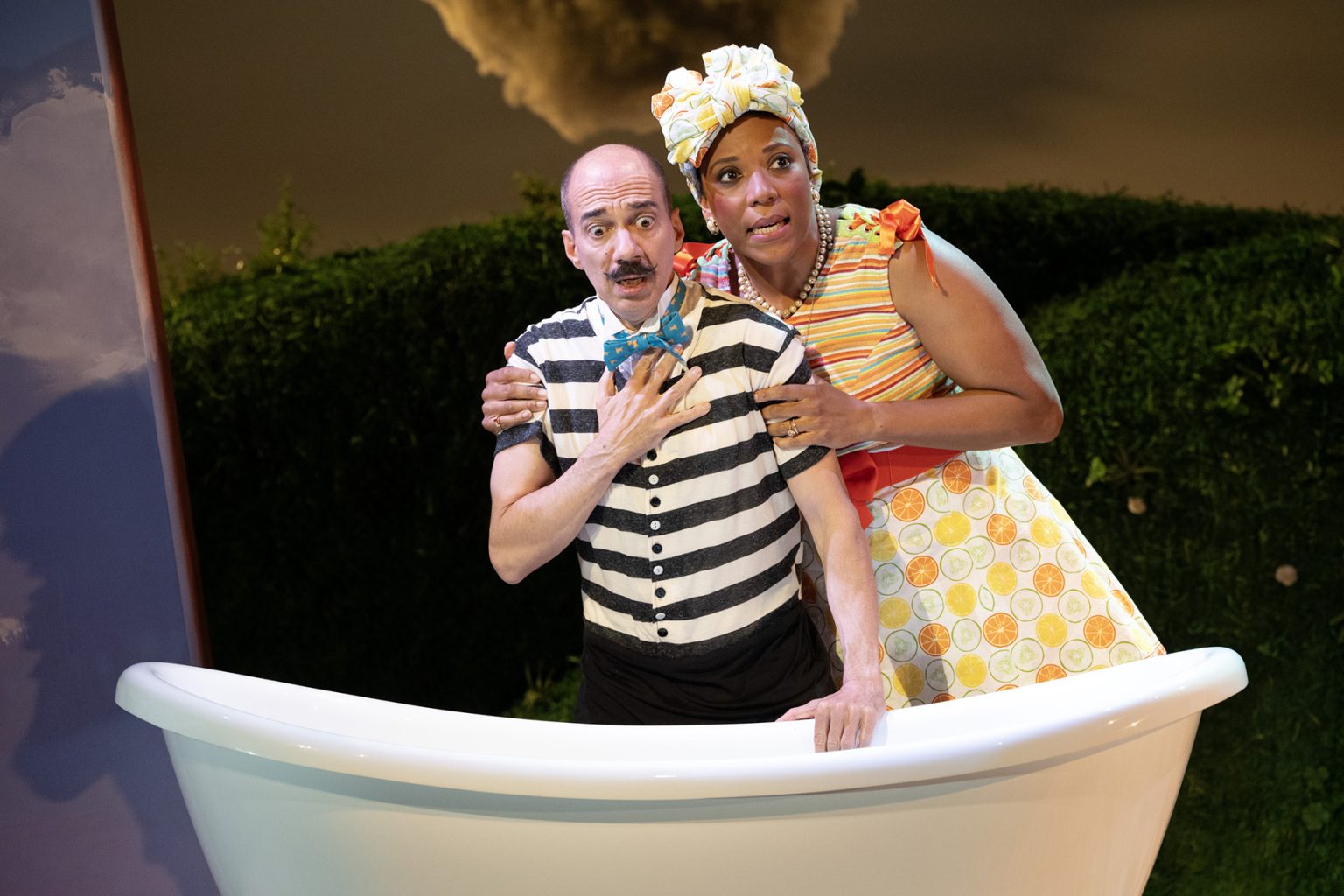
Pictured Above: Evan Zes and Patrese McClain in Mrs. Christie at McCarter Theatre. Photo Credit: Daniel Rader.
“You have compassion for the characters, and then you find that you’re laughing at them in the next [moment],” says Armbruster. “There’s something about putting those two things right up next to each other that feels exciting to me. And maybe because we get to have those feelings [while sitting with] a whole bunch of people in the theater in real time, you can feel the exhale of laughter, and then the inhale of surprise.”
“Christie has a comedy of manners that runs through her books, in the same way that Jane Austen has a streak of that in hers, a kind of social commentary,” says Armbruster. In Mrs. Christie, “there’s a kind of British wit that runs through it.”
Christiana Clark, who plays Agatha Christie, finds in Armbruster’s script “the depths that both [Agatha and Lucy] are in and working their way through, but there is also a zippiness, an effervescence to the dialogue. The language helps it to stay buoyant and keeps the comedy available at all times.”
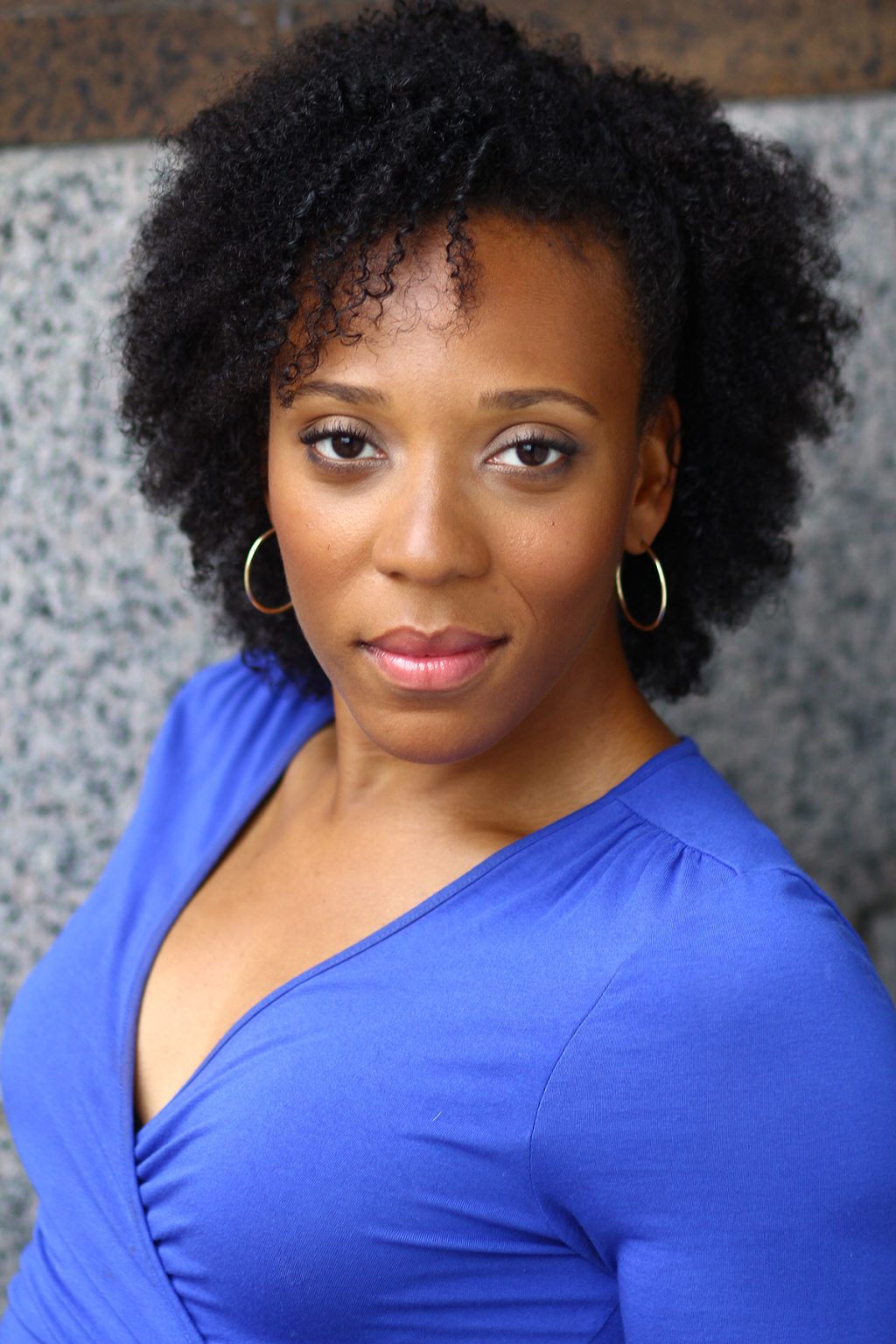
Pictured Above: Christiana Clark. Photo Credit: Contributed.
Patrese McClain, who plays Lucy, lightheartedly refers to her character as “my inner Lucille Ball.” When asked if Lucy is possibly a future self of Agatha, she replies, “I think if there’s any spiritual lineage, most definitely. They both possess the parts that the other needs to uncover in themselves to move forward.”
If there’s anyone who’s a bigger Agatha Christie nerd than Armbruster, it’s her director, Donya K. Washington. Besides reading all the mysteries, she has watched the PBS documentary and all the TV shows, and has “deep opinions about which [are] better.” As Washington sees it, “The epicenter of the play is the two of them [—Agatha and Lucy–] wrestling with that moment in your life where what you thought life was going to be like is suddenly no longer possible. And then what do you do? How do you move forward? It’s a midlife crisis comedy, if you will.”

Pictured Above: Patrese McClain. Photo Credit: Contributed.
While we’re looking at Agatha in 1926 and Lucy in 2026, “they go to this other place that’s between the two times,” explains Washington. “It’s less about what’s different in the two time periods, and more of what’s the same. We have more in common than we don’t, with people who came before us.” Washington likes to say that “Agatha and Lucy are intergalactic best friends.” And she points out that Lucy was named after housekeeper Lucy Eyelesbarrow from Christie’s 4.50 From Paddington, a Miss Marple novel.
Washington admits there are plenty of Agatha Christie Easter eggs in the production “that are purely for my own benefit.” For instance, we needed a flower [on the set], so it’s a yellow iris,” because that’s the title of a short story featuring the masterful Hercule Poirot.
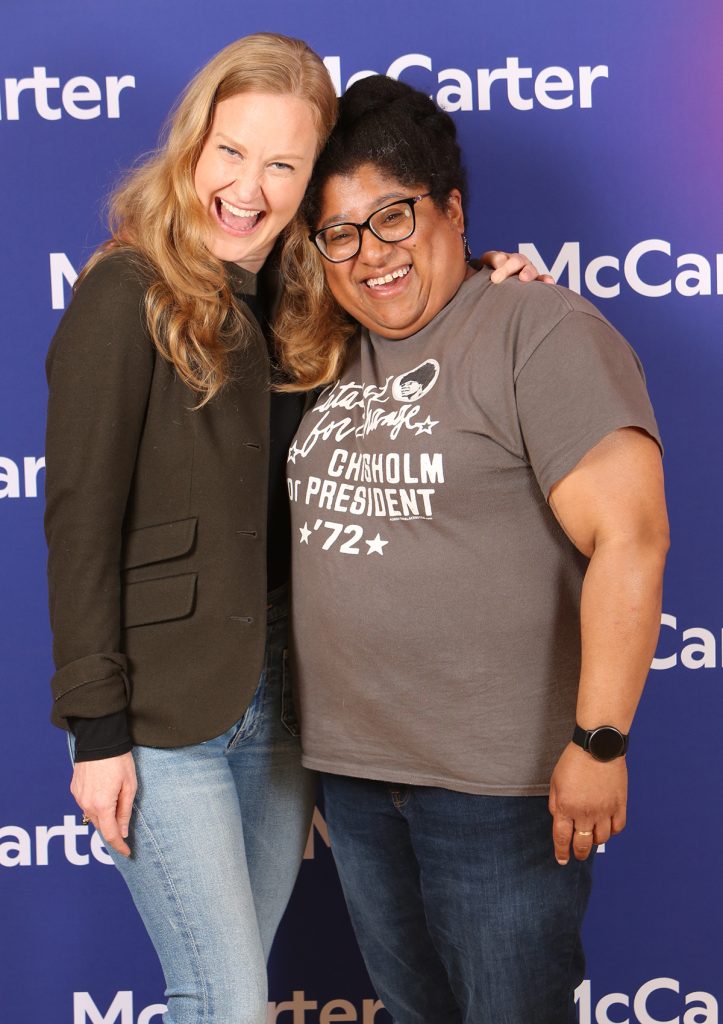
Pictured Above: Heidi Armbruster and Doyna K. Washington. Photo Credit: Contributed.
Costume and set designer Lex Liang has framed the stage for Act 1 at the top with a clock that looks like one at a train station–railroad journeys being a common scenario in so many of Christie’s mysteries. The clock helps clarify to the audience the time jumps that occur through the course of the play.
Crammed bookshelves line either side and the top of the stage because “Agatha was prolific. The number of books that woman wrote is astonishing,” says Washington. Also visible are Cornell shadow boxes containing objects associated with her stories–such as a photograph of a German Luger–and with her life, including a surfboard, since Christie was one of the first British women to master standing up on a surfboard, and a photograph of her brother Monty in a toy car. “It’s meant to be a version of Styles, the house where she and Archie lived at the time,” and the setting of her first published mystery, The Mysterious Affair at Styles.
When the curtain falls at the end of Act 1, you’ll just have to return to your seat after intermission to see what Armbruster, Washington, and Liang have dreamed up for Act 2.

Pictured Above: Lex Liang. Photo Credit: Contributed.
Mrs. Christie will run from May 6-May 31 at McCarter Theater in Princeton, NJ. Tickets are available at mccarter.org.