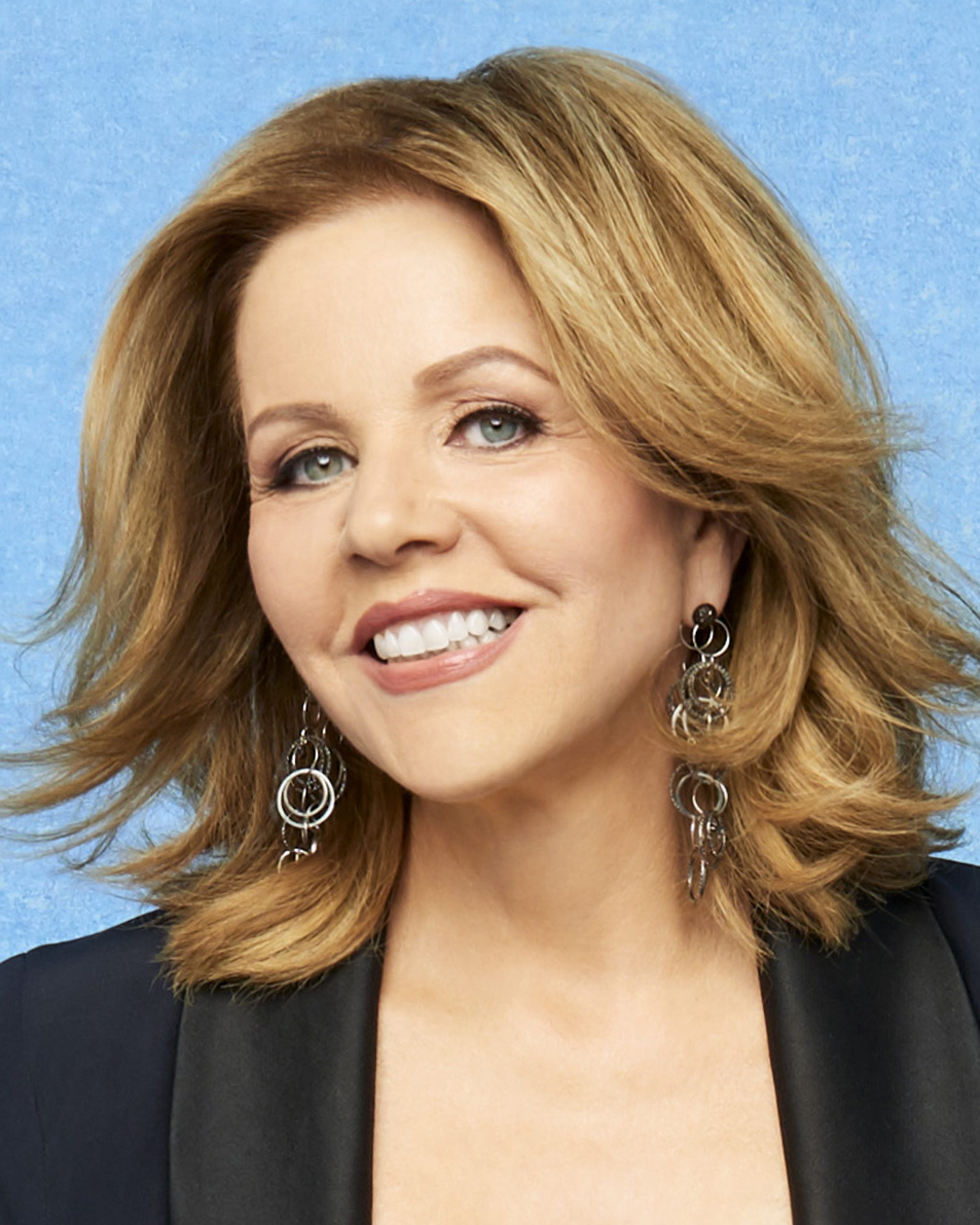
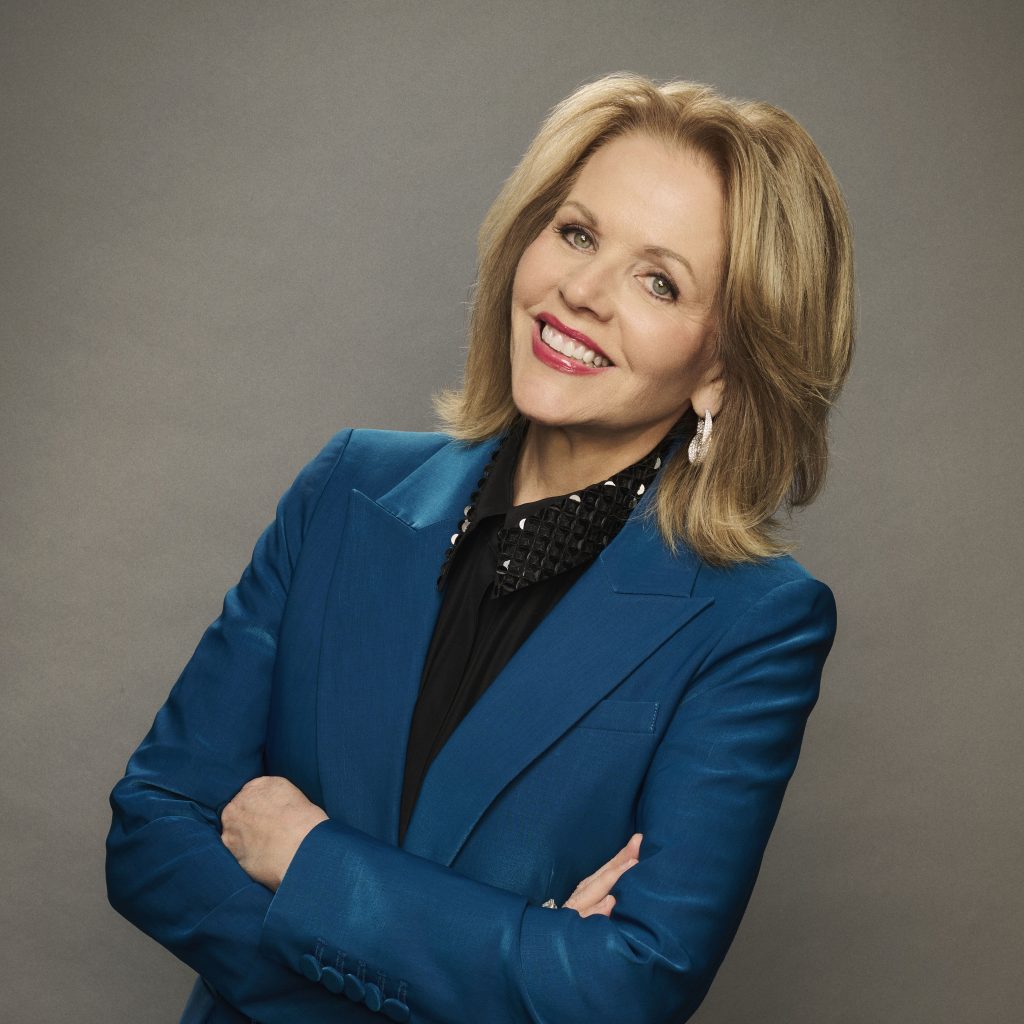
Pictured Above: Renée Fleming. Photo Credit: Andrew Eccles Decca.
In Full Voice: A Q&A with Renée Fleming
By: Lori Goldstein
Renée Fleming, arguably America’s most well-known soprano, will sing a program of her favorite arias and songs on June 7th at the 2025 Princeton Festival. Here she responds to questions posed by Lori Goldstein, music features writer for Arts News Now.
What or who inspired you to become an opera singer?
As the child of two public school vocal music teachers, a life in music was probably inevitable for me. Like everyone, I moved through phases, but music was a constant. I was very fortunate to grow up in an area with robust arts education in the public schools. I can’t stress enough how important I think the arts and fostering creativity are in school curriculums. I was a shy child, and music gave me an expressive outlet. I had a “girl with a guitar” period, when I wrote and sang songs that were about the same things that other teenagers were dealing with. In college, I sang jazz and thought that’s where my career might be, but I wasn’t ready to face a life of touring when that opportunity arose. And ultimately, I didn’t even really feel assured in my classical technique until I was in my thirties.
What were some of your favorite operatic roles and/or composers, and would you explain why?
Early in my career, Mozart was the most important composer for me. I now refer to Mozart as one of my strictest voice teachers, because his music requires a kind of perfectionism, crystalline intention and intonation. Everything shows. This is the case for the Countess in The Marriage of Figaro, in which I made many of my major house debuts. But as a favorite composer, Strauss has been central in my repertoire throughout my career. The long, arching lines of his vocal writing are a perfect fit for my capabilities. And I respond to the poetry he chose for his songs, and the complex, fascinating women characters in his opera. He had an unsurpassed gift for writing for the soprano voice–perhaps because he was married to a soprano. The character I love the most has been the Marschallin in Strauss’s Der Rosenkavalier. She is a strong, complicated woman facing real challenges that we all confront.
You’ve been a champion of new music. In May, you performed Kevin Puts’ The Brightness of Light with the New York Philharmonic, and in 2022, you starred in the world premiere of his acclaimed opera The Hours at the Metropolitan Opera and its return in 2024.
At the Princeton Festival you’ll also sing Alan Fletcher’s Three American Songs. A Princeton University graduate, Fletcher is president and CEO of the Aspen Music Festival, where you premiered the songs in 2024. How do these and other contemporary composers speak to you in perhaps different ways than do the canonical European opera composers, whose roles you have performed throughout your career?
I’ve always loved contemporary music, and I regard it as a duty (one I enjoy) to support its creation, so that “classical” music continues to thrive. It’s crucial that we explore experiences and narratives that are relevant to new audiences. Dramatizing major issues like AIDS and depression in The Hours, or playing Pat Nixon, a front-page 20th-century figure in Nixon in China, or singing the letters of an iconic American artist, Georgia O’Keeffe, in The Hours– these are stories that can reach audiences who might not connect as easily with (for instance) a courtesan in ancient Egypt (Thaïs). I just saw The (R)evolution of Steve Jobs by composer Mason Bates at Washington National Opera, and it was gorgeous. The chance to commission new work is incredibly exciting for me.
For the album I made during the pandemic, Voice of Nature: the Anthropocene, I wanted to look at humankind’s complicated relationship with nature. To show how the natural world has inspired us, I had a wealth of material from classical song literature to choose from. But to examine our current relationship with nature, and the ways in which it is in peril, I needed new music, which I commissioned from Kevin Puts and Nico Muhly. Now these songs are part of a program I tour with a film by National Geographic.
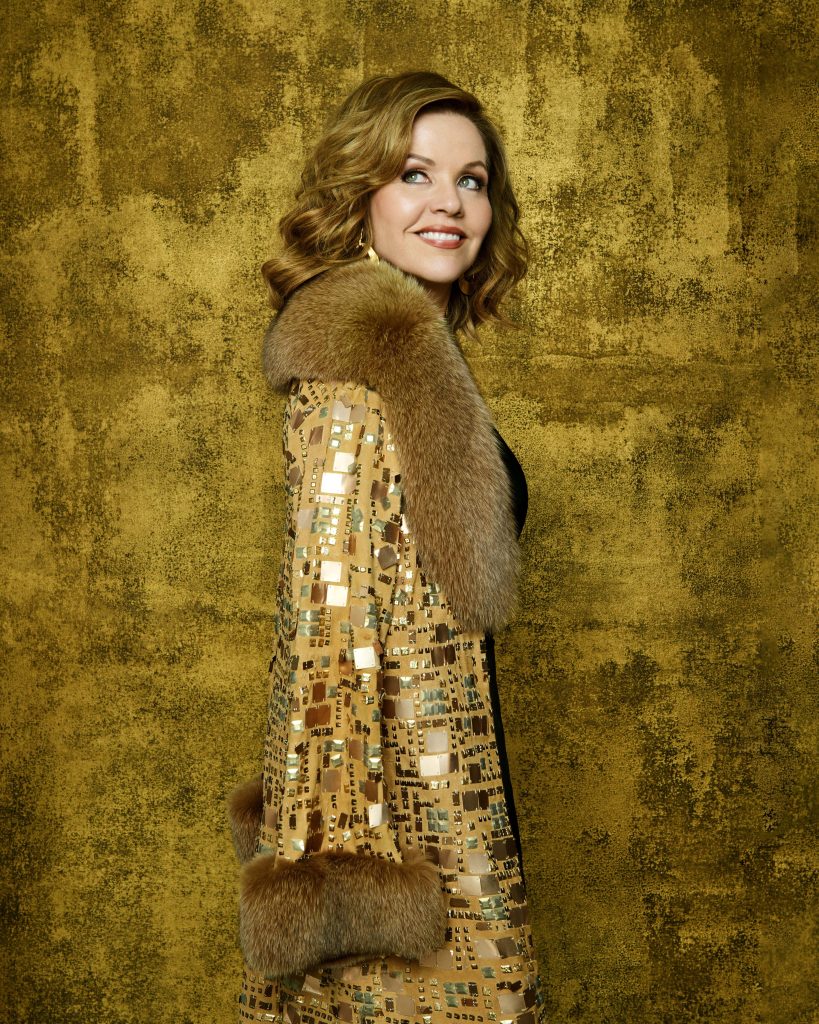
Pictured Above: Renée Fleming. Photo Credit: Andrew Eccles Decca.
You’ve edited a collection of essays from leading scientists, creative arts therapists, and educators in Music and Mind: Harnessing the Arts for Health and Wellness. How did the ideas for this book originate, and what have you learned in your presentations of it around the country?
The book has been a passion project for me. Over the past decade, I’ve become an advocate for the powerful effects the arts have on our health and wellbeing. Researchers are uncovering incredible benefits across every stage of life. Cutting-edge advances in technology are revealing the ways music and other arts can leverage our brain’s plasticity in treatments for stroke, dementia, acquired brain injury, Parkinson’s disease, pain, and a wide range of medical challenges. There are also amazing benefits for childhood development and lifelong mental and emotional health. I am certain that each of us will at some point benefit from these discoveries, so I created this anthology as an overview, an introduction to a new, rapidly expanding field of inquiry.
Your first professional performance was in 1986. To what do you owe the longevity of your career, which does not appear to be abating at all?
I think the years, a decade, really, that I spent honing my technique, figuring it out in the studio, have served me well. And fortunately, I’ve been able to sing the music that was right for my voice. Early in my career, I was told that a soprano has to sing the famous Italian verismo roles–Butterfly, Tosca, and other heroines of Puccini–in order to be truly successful. That’s very exciting repertoire, but it was not appropriate for my voice. The music that was right for my instrument, and has been the core of my repertoire, has been Mozart, Strauss, Massenet, and some Verdi. And I discovered operas like Rusalka and Eugene Onegin, that weren’t as commonly performed then, and many new American works.
To purchase tickets and to confirm concert dates, times and locations, consult the princetonsymphony.org website.
 Independent Arts News Reporting