 Independent Arts News Reporting
The Barnes Foundation Presents Rochelle Feinstein: The Today Show
Reported on Wednesday, November 25th, 2026.
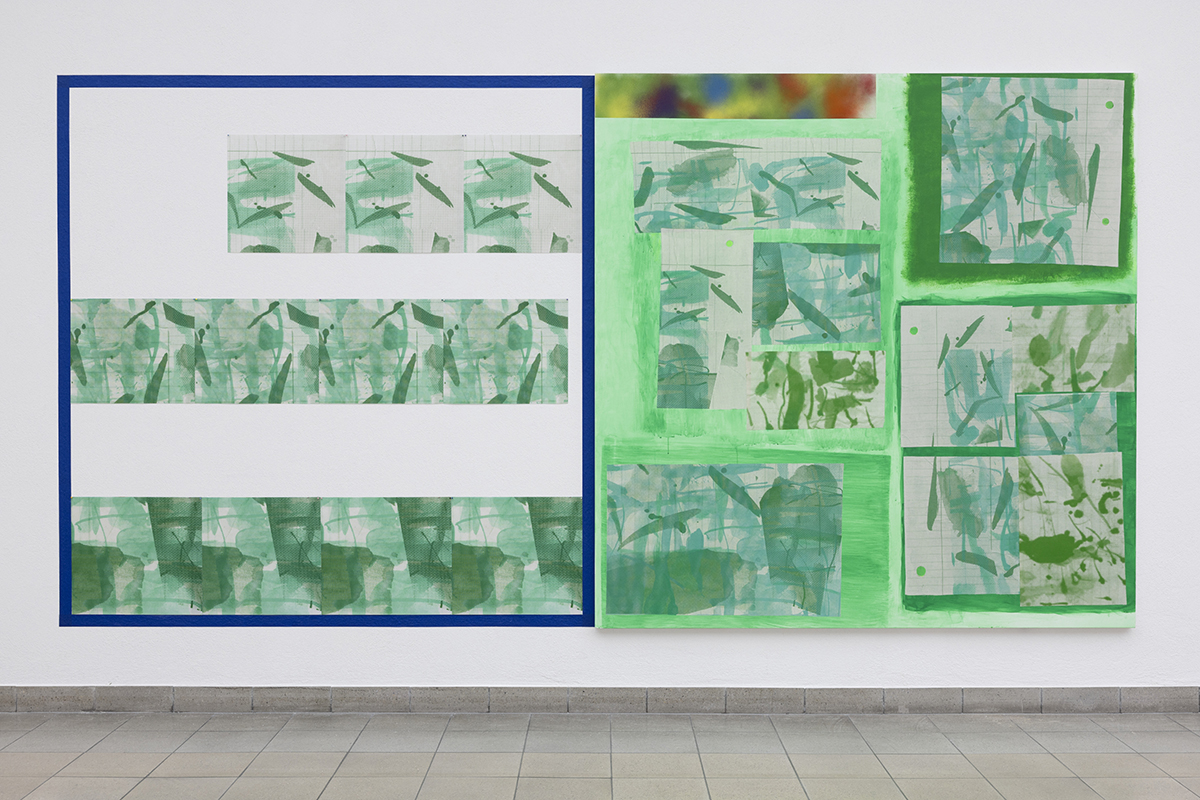
Pictured Above: Trauma Buddy Green Present Conditional (LK) Rochelle Feinstein Barnes press. Photo Credit: Contributed.
NEWSROOM POST: PHILADELPHIA, PENNSYLVANIA
Featuring mixed-media works examining abstraction, culture, and public life. Newly commissioned work on view in Annenberg Court
On view February 21 through May 9, 2027 Press Preview: Wednesday, February 17, 9:30–11:30 am
Philadelphia, PA — The Barnes Foundation has announced Rochelle Feinstein: The Today Show, the US debut of an exhibition featuring recent works by American artist Rochelle Feinstein (b. 1947), on view in the Roberts Gallery from February 21 through May 9, 2027. In the mixed-media paintings, sculptures, and works on paper featured, Feinstein employs the visual vocabulary of gestural expressionism to novel ends. Co-organized by the Vienna Secession, Kunsthaus Glarus, and Ludwig Forum, Aachen, and curated for the Barnes by Thom Collins, Neubauer Family Executive Director and President, Rochelle Feinstein: The Today Show presents more than 30 works, most of which have never been exhibited in the United States.
Rochelle Feinstein: The Today Show is sponsored by Comcast NBCUniversal. Generous support is provided by Ralph Citino and Lawrence Taylor, the Helen Frankenthaler Foundation, and an anonymous donor.
Over the past four decades, Feinstein has developed an oeuvre in which a wide range of abstract painting practices—from rigid geometric abstraction to fluid color field—are subtly, cleverly infiltrated by social and political concerns. She uses diverse materials and a variety of techniques, resulting in works that feature everything from silk-screened muslin to acrylic paint on drop cloths. For the past 10 years, her palette has been dominated by prismatic color: the hues of the visible spectrum (red, orange, yellow, green, blue, indigo, violet) that appear when white light passes through a prism. Images of rainbows—traditional symbols of harmony, inclusion, and optimism—are abstracted and distorted in her work to highlight the rising social unrest, instability, and increasingly hostile and divisive politics in the United States.
“We are proud to present Rochelle Feinstein: The Today Show, the exhibition’s US debut and Feinstein’s first museum exhibition in Philadelphia,” says Thom Collins. “In her work, Rochelle Feinstein often combines formal experimentation with pointed social and political commentary, recognizing the potential of critical abstraction to illuminate contemporary experience. This exhibition is aligned with our commitment to presenting the work of remarkable women artists, including contemporary artists such as Cecily Brown and Mickalene Thomas, and significant but underrecognized women working in the European modernist vanguard of the late 19th and early 20th centuries, like Marie Laurencin and Suzanne Valadon.”
The exhibition’s title references TODAY, a genre-defining morning television program that first aired in 1952. The show’s logo features a stylized image of a rising sun, which is also reminiscent of a rainbow— two solar phenomena that Feinstein engages with deeply in the exhibition.
The Barnes has also commissioned a site-specific installation from Feinstein for the Annenberg Court, created in collaboration with The Fabric Workshop and Museum, Philadelphia, and produced at the Tyler Center for Art and Creative Exchange. Titled The Situations’ Room (2027) and on view January 30, 2027 through January 31, 2028, this 11-panel installation is part print, part painting, and part social sculpture. The work features gray inks screen printed by hand on fabric, a stark contrast to the vivid colors used in the works on view in the Roberts Gallery. Named for both the storied White House meeting space and the CNN news program, this work is inspired by Feinstein’s longstanding fascination with Russian artist El Lissitzky’s Abstract Cabinet at the Landesmuseum in Hanover, Germany. Abstract Cabinet was a room in which avant-garde paintings and sculptures were presented in an ever-changing display that invited viewers to shape their own experience, not unlike how Dr. Albert C. Barnes arranged his art collection during his lifetime. Dr. Barnes visited the Landesmuseum in 1927, before the Abstract Cabinet was destroyed by the Nazis. In The Situations’ Room, Feinstein connects the philosophical and educational approach of Dr. Barnes’s ensembles—dense groupings in which objects from different cultures, time periods, and genres are mixed together—to the radical display of works in Abstract Cabinet before its destruction in the mid 1930s.
“The Today Show is a cacophony of different visual languages. It resembles what for me feels like the chaos of every day, a constant input of noise that I am drawn to and, at the same time, want to block out,” says Feinstein. “I’m delighted that Philadelphia and the Barnes will be the site of The Today Show’s first US presentation. I look forward to the public’s engagement with my brand-new work, The Situations’ Room, in the Annenberg Court, a communal space in which art can be experienced and felt with others.”
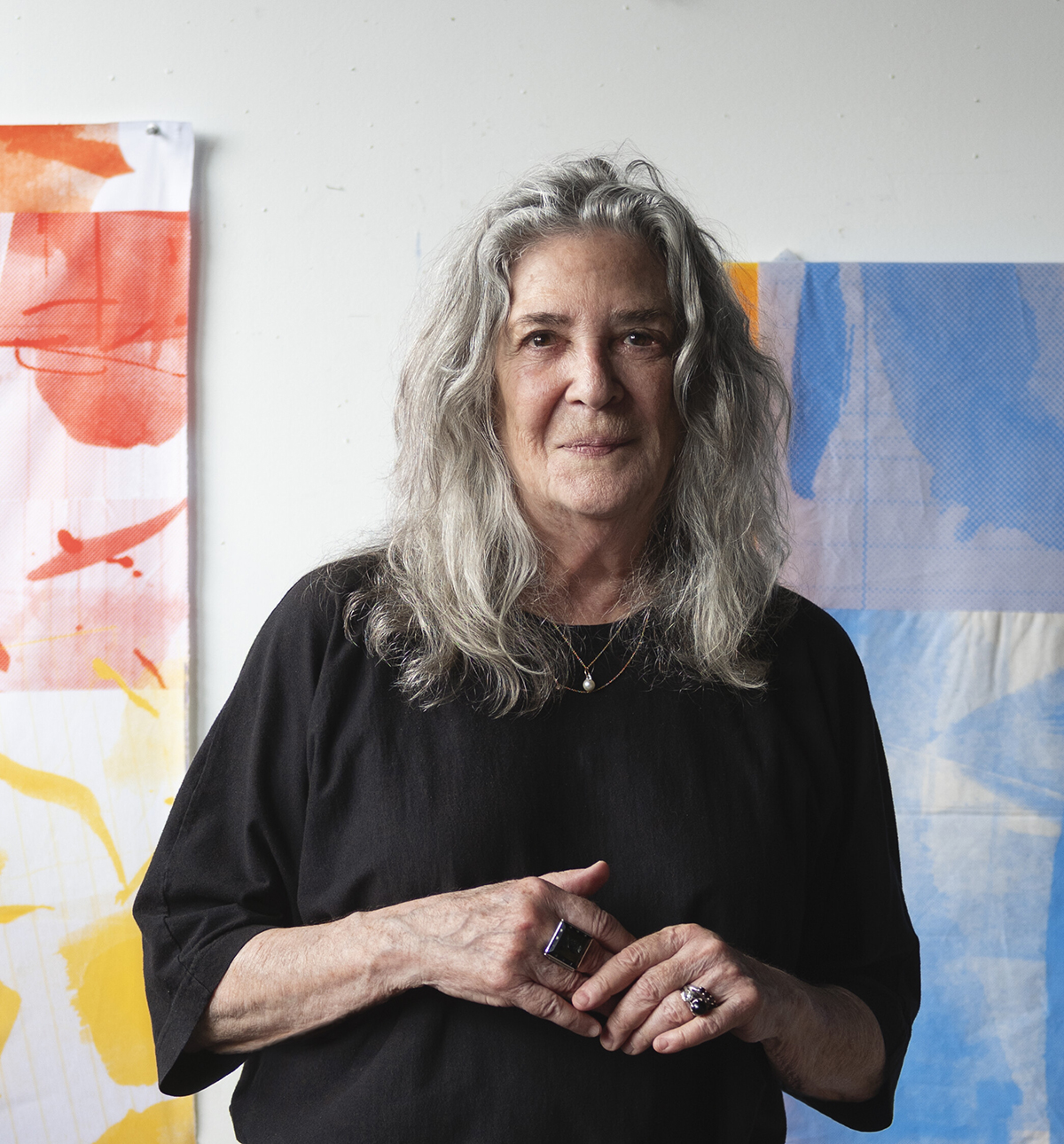
Pictured Above: Rochelle Feinstein. Photo Credit: Albrecht Fuchs press.
This exhibition includes mixed-media paintings, sculptures, and works on paper. Highlights include:
-Grammars (2024): In the mid-1970s, abstract expressionist Lee Krasner produced a series of works by collaging jagged fragments of charcoal figure drawings she had made in the 1930s onto the surfaces of new, fluid and colorful paintings on canvas. Awestruck by Krasner’s late works— each titled using a verb form and ever focused on expressing aspects of today’s explicitly “present” experience in abstract visual language—Feinstein created a series of six paintings called Grammars, each titled after a present grammatical tense. In these works, she layers screen-printed reproductions of older gestural marks over hand-painted fields of brushy color. Art historian David Joselit describes these hybrid objects as “pictures of pictures of gestures—an infinite regress of the abstract expressionist mark.” The perpetually disorienting and destabilizing effect of this infinite regression drives the analogy between the Grammars and our individual experiences of the current historical moment.
-Golden Moments / Silver Linings (2021–24): This photo series takes its nostalgic title from the names of two types of Polaroid instant film that produce pictures with gold and silver borders. Feinstein scoured the internet for sunrise images and took Polaroids directly from her computer screen before embellishing them with watercolor. While the titles and images might suggest a spirit of optimism—the promise of a new day—the works are hung upside down as a comment on the unsettled and unsettling state of global affairs. Many of the original images she photographed were produced with the aid of artificial intelligence, deliberately undermining their uncritical consumption as inspirational icons.
-Henny Penny (2023): In this painting named for the title character of the cautionary European folktale (better known as “Chicken Little” in the United States), Feinstein gathers the full catalogue of gestures used throughout the exhibition in a single small, square canvas. The result is a dense, chaotic image that can be read as an emblem for this political moment, in which a cacophony of sensationalized news sows dissent and social and political instability at our peril.
-Memory Holes (2003–26): In this series, Feinstein alludes to the rampant production of erasures in our current politics and literalizes the process by creating “memory holes”—a reference to George Orwell’s dystopian novel Nineteen Eighty-Four—of her own. She lays a pictorial ground printed with digitized images then layers them with a variety of hand-painted, printed, and collaged materials until they all but disappear in the manner of a palimpsest.
-Embedded (2024): To produce Embedded, Feinstein saturated the loose weave of an inexpensive drop cloth with a prismatic haze of paint and suspended it in a block of clear resin. Appearing at once to be dissolving and drifting to the ground as so much colorful dust, this symbolic form might be understood as a melancholy meditation on or anticipatory elegy for a failing experiment in democracy.
-Palette (2024): This diptych juxtaposes a horizontal panel of crisp, linear bars in the colors of the visible spectrum against another in which the same acrylic paints are brushed in transparent layers onto the canvas to create a wildly swirling field of loosely applied color. With Palette, Feinstein has created an emblem for this social, political, and economic moment: an optimistic image representing order, clarity, control, and stability in a tense, diagrammatic relationship with a pessimistic image of disorder, confusion, chaos, and instability.
ABOUT THE ARTIST
Rochelle Feinstein (b. 1947) lives and works in New York. Her work is in public collections including the Museum of Modern Art, New York; Amorepacific Museum of Art, Seoul; Städtische Galerie im Lenbachhaus, Munich; Pérez Art Museum Miami; Museum of Fine Arts, Boston; Cleveland Museum of Art; Hammer Museum, Los Angeles; and Sheldon Museum of Art, University of Nebraska-Lincoln. Feinstein is the recipient of numerous grants and fellowships, including a John Simon Guggenheim Fellowship, the Foundation for Contemporary Art, Anonymous Was a Woman, the Joan Mitchell Foundation, the Louis Comfort Tiffany Foundation, and the American Academy in Rome Prize Fellowship in Visual Arts. She earned her BFA from Pratt Institute, New York, and her MFA from the University of Minnesota, Minneapolis. She is Professor Emerita of Painting and Printmaking at Yale University School of Art, New Haven, Connecticut.
Prior to the Barnes, The Today Show was presented at the Vienna Secession, Austria (2024), Kunsthaus Glarus, Switzerland (2025), and Ludwig Forum, Aachen, Germany (2025–26). Another major survey exhibition of Feinstein’s work originated at the Centre d’Art Contemporain, Geneva (2016), and traveled to the Städtische Galerie im Lenbachhaus, Munich (2016), the Kestner Gesellschaft, Hanover, Germany (2017), and the Bronx Museum of the Arts (2018–19).
EXHIBITION CATALOGUE
Accompanying the exhibition is a fully illustrated, 128-page catalogue published and distributed by the Barnes Foundation and edited by Thom Collins with contributions by Rochelle Feinstein, David Joselit, Melanie Ohnemus, and Kelly Shindler.
EXHIBITION ORGANIZATION
Rochelle Feinstein: The Today Show is co-organized by the Vienna Secession, Kunsthaus Glarus, and Ludwig Forum, Aachen, and curated for the Barnes by Thom Collins, Neubauer Family Executive Director and President.
The Situations’ Room (2027) by Rochelle Feinstein was commissioned by the Barnes Foundation, created in collaboration with The Fabric Workshop and Museum, Philadelphia, and produced at the Tyler Center for Art and Creative Exchange.
Rochelle Feinstein: The Today Show is on view in the Roberts Gallery at the Barnes from February 21 through May 9, 2027.
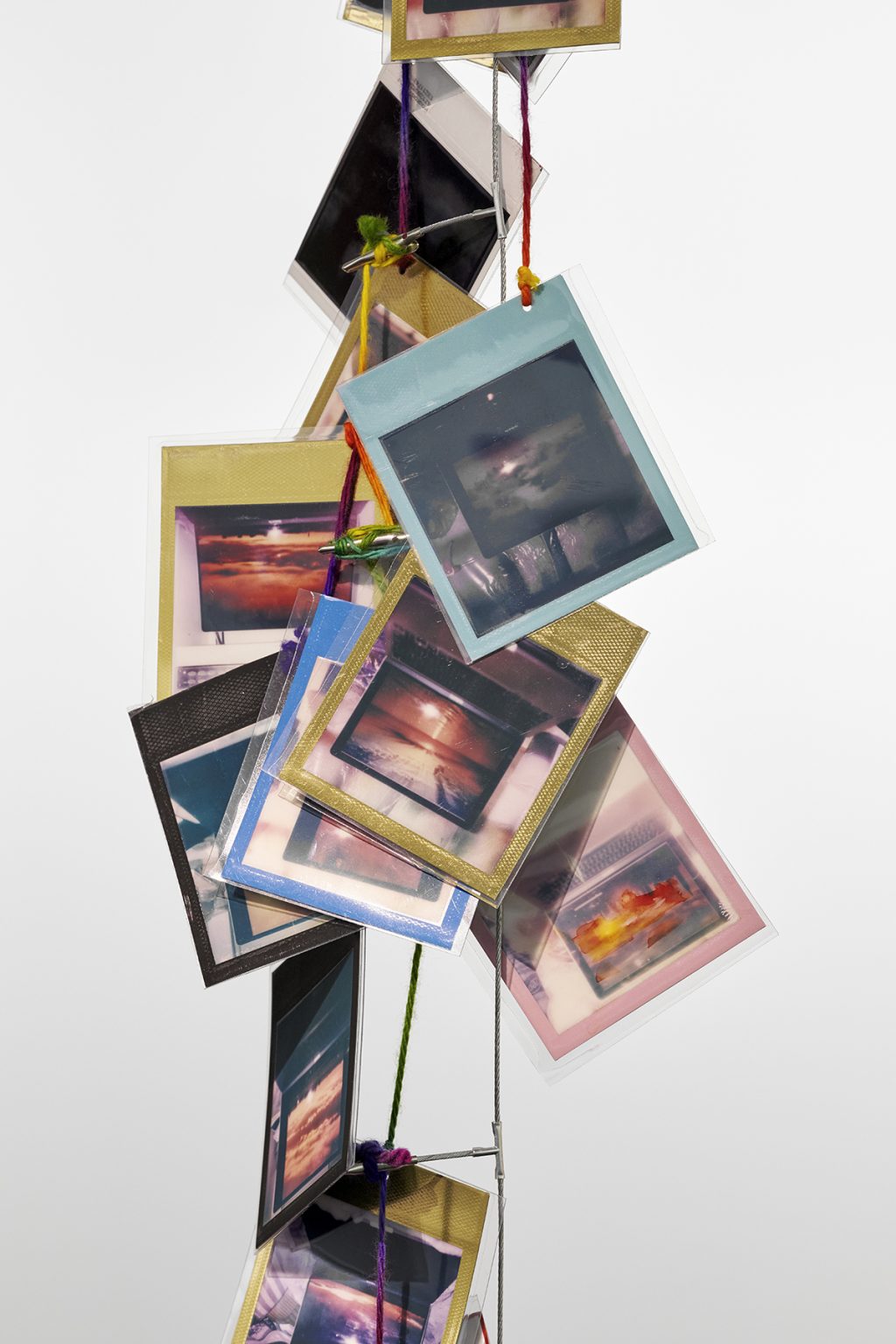
Pictured Above: Golden Moments blue Rochelle Feinstein Barnes press. Photo Credit: Contributed.
ABOUT THE BARNES FOUNDATION
The Barnes is a nonprofit cultural and educational institution that shares its unparalleled art collection with the public, organizes special exhibitions, and presents programming that fosters new ways of thinking about human creativity. The Barnes collection is displayed in ensembles that integrate art and objects from across cultures and time periods, overturning traditional hierarchies and revealing universal elements of human expression. Home to one of the world’s finest collections of impressionist, post-impressionist, and modern paintings—including the largest groups of paintings by Pierre-Auguste Renoir and Paul Cézanne in existence—the Barnes brings together renowned canvases by Henri Matisse, Pablo Picasso, Amedeo Modigliani, and Vincent van Gogh, alongside African, Asian, ancient, medieval, and Native American art as well as metalwork, furniture, and decorative art.
The Barnes was established by Dr. Albert C. Barnes in 1922 to “promote the advancement of education and the appreciation of the fine arts and horticulture.” A visionary collector and pioneering educator, Dr. Barnes was also a fierce advocate for the civil rights of African Americans, women, and the economically marginalized. Committed to racial equality and social justice, he established a scholarship program to support young Black artists, writers, and musicians who wanted to further their education. Dr. Barnes became actively involved in the Harlem Renaissance, during which he collaborated with philosopher Alain Locke and Charles S. Johnson, the scholar and activist, to promote awareness of the artistic value of African art.
Since moving to Philadelphia in 2012, the Barnes has expanded its commitment to diversity, inclusion, and social justice, teaching visual literacy in groundbreaking ways; investing in original scholarship relating to its collection; and enhancing accessibility throughout every facet of its programs.
The Barnes is situated in Lenapehoking, the ancestral homeland of the Lenape people. Read our Land Acknowledgment.
Hours and ticket prices are listed at BarnesFoundation.org.