Independent Arts News Reporting
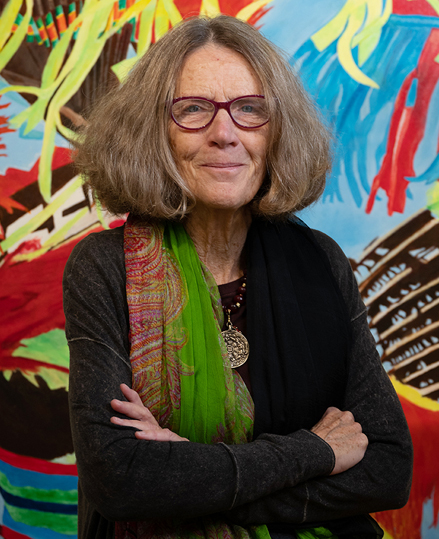
Pictured Above: Composer Julian Grant. Photo Credit: Fran Marshall of Marshall Light Studios,
"Vaudeville in Teal:" A World Premiere Leads PSO’s Joyfully Theatrical March Program
By: Lori Goldstein
With a world premiere by Princeton-based composer Julian Grant, a playful Baroque-meets-modern concerto by Viet Cuong, and Stravinsky’s neoclassical Pulcinella, the Princeton Symphony Orchestra delivers a March program bursting with color, character, and wit
One of the guiding principles of the Princeton Symphony Orchestra (PSO) is to feature the work of contemporary composers connected to the Princeton community. Its March 7-8 concerts include the world premiere of Vaudeville in Teal, a harpsichord concerto by long-time Princeton resident, British-born Julian Grant–performed by world-renowned harpsichordist Mahan Esfahani. The Orchestra will also perform Extra (ordinarily) Fancy, a double oboe concerto composed by Viet Cuong, a doctoral graduate of the University’s music composition department. Cuong’s dynamic percussion quartet concerto, Re(new)al, was enthusiastically received last season. Stravinsky’s Pulcinella completes the program.
PSO’s music director Rossen Milanov is “thrilled to be offering audiences the excitement of this world premiere performance. Julian Grant is a gifted composer with ties to Princeton and our orchestra, and Mahan is an incredible artist who has single-handedly brought the harpsichord into the modern age. I played the oboe in my youth, so Viet Cuong’s imaginative work for two oboes is something I look forward to personally, and I’ve been wanting to conduct the complete Pulcinella here for some time. There is much to love in this joyful program!”
When the Manitoba Chamber Ensemble Orchestra acquired a brand-new harpsichord, Music Director and conductor Anne Manson contacted Grant, who had written two works for the Orchestra in the past. She knew the harpsichord would be useful in future early music programming, but she wanted to feature it somehow. Grant volunteered, “You should ask me to write you a concerto.” And as to who should premiere it, Grant automatically thought of harpsichordist Mahan Esfahani, whom he’d often meet up with in London over the years. A long-standing member of the PSO’s board of trustees, Grant informed Milanov and executive director Mark Uys of Esfahani’s commitment to the concerto’s premiere, and they programmed it for the 2025-2026 season. The concerto will then be performed by the Manitoba Chamber Ensemble Orchestra.
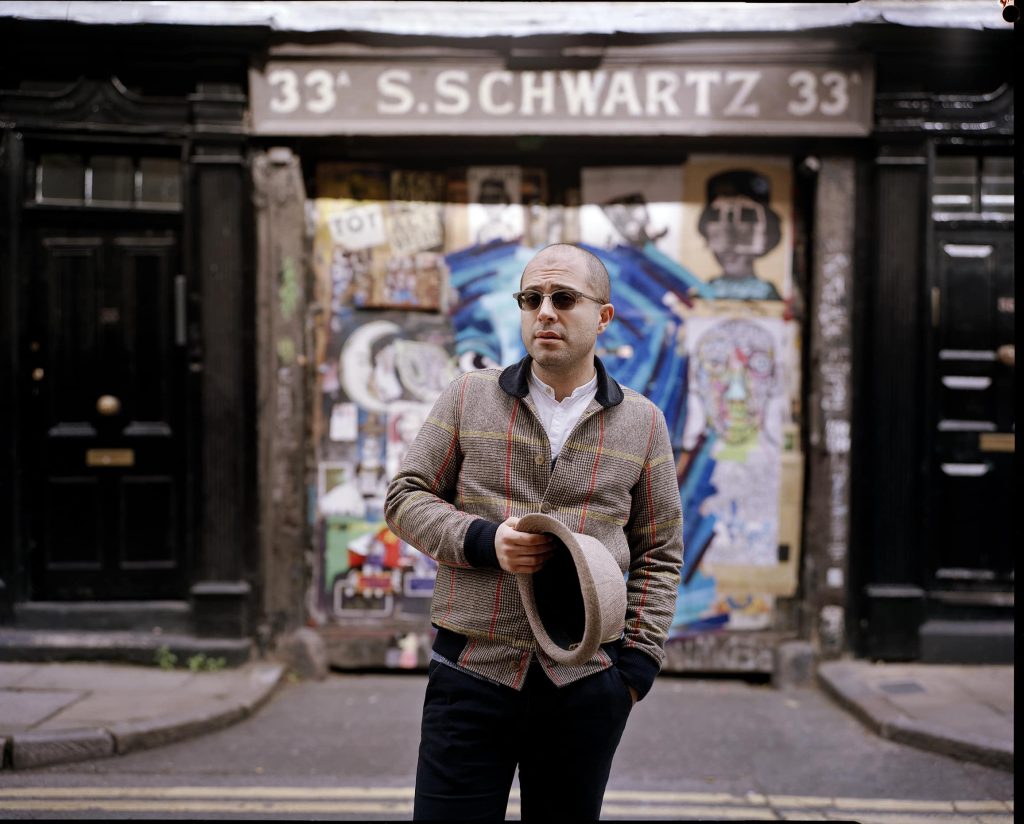
Pictured Above: Mahan Esfahani. Photo Credit: Kaja-Smith.
An Iranian-American who now resides in Prague, Esfahani has built a unique reputation with his life mission to record all of J.S. Bach’s keyboard works and to commission and program harpsichord music written by contemporary composers. He was the first and only harpsichordist to be a BBC New Generation Artist (2008-2010) and in 2022 he became the youngest recipient of the Wigmore Medal. His richly-varied discography includes ten critically acclaimed recordings for Hyperion and Deutsche Grammophon—garnering one Gramophone award, two BBC Music Magazine Awards, a Diapason d’Or and “Choc de Classic” in France, and two ICMAs.
As soon as you begin a conversation with composer Julian Grant, his whimsy and wisdom surface—which is what you’d expect from a man who has written more than 20 operas with titles like The Nefarious, Immoral But Highly Profitable Enterprise of Mr. Burke & Mr. Hare as comically macabre as Sweeney Todd. Vaudeville in Teal is meant to be, as the first word in the title implies, a campy variety show in six acts.
Grant recalls “those old shows that used to have clowns, someone doing bird impressions, an actor doing a soliloquy from Shakespeare, Anna Pavlova doing The Dying Swan. So it’s really a set of variations in disguise, and they’re actually, funnily enough, related”–by a three-note motif, plucked by a solo bass at the outset, which permeates through the course of the work.
I ask him, “Why teal? Does that have something to do with the keys in which the piece is written?” (Some composers and musicians are known to think of keys in terms of color.) Julian deflates my question when he tells me the harpsichord he owns is painted teal. Not the answer I anticipated, but it certainly makes me laugh, which is what Julian often asks of his audience. Ironically, Esfahani associates keys with colors and says, “teal is a color I associate more with sharp keys,” which he tells me Grant employs in Vaudeville in Teal.
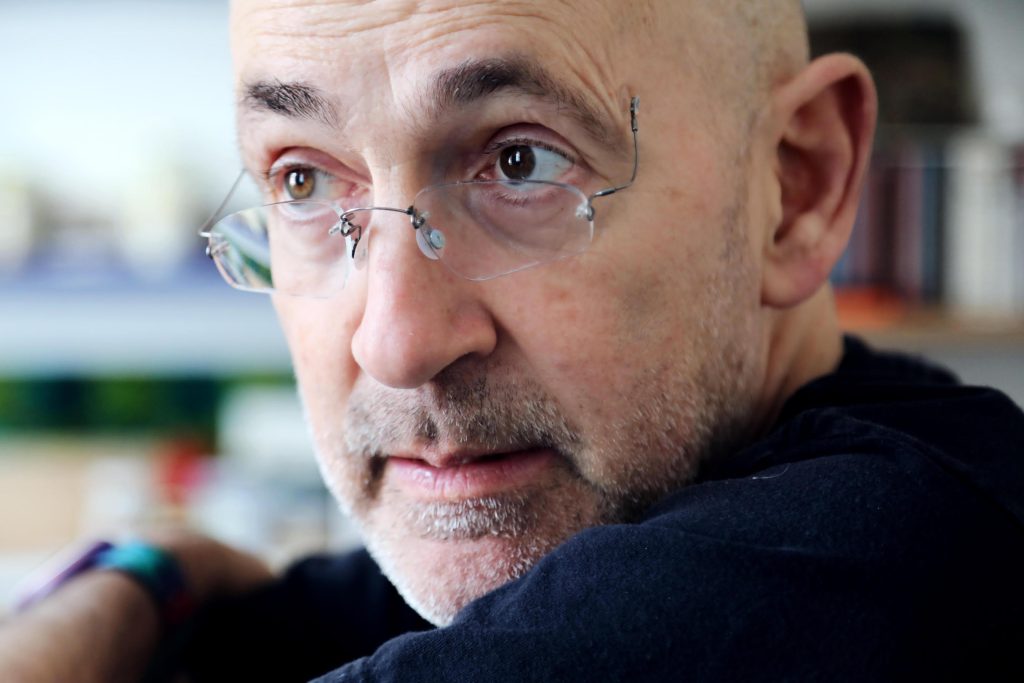
Pictured Above: Composer Julian Grant. Photo Credit: Fran Marshall, Marshall Light Studios.
“Funnily enough, writing a concerto like this Vaudeville is like writing an opera,” says Grant. “You’ve got a protagonist, haven’t you? I wanted to feature it so that the harpsichord generates the material.” That is not the role the instrument occupied during the Baroque era, or even in 20th century harpsichord concertos Julian listened to before embarking on his own. With the guidance of Princeton University early music professor Wendy Young, Grant explored the unique capabilities of the instrument.
Esfahani similarly sees the harpsichord as the protagonist in Vaudeville, in that “the burden of the dramatic tension falls on the soloist. It’s a very dramatic work, it’s very theatrical, and I mean that in the sense that there’s a clear narrative. It’s been a fascinating journey in determining what this sort of narrative arc of the piece is. And the instrument is a protagonist in that all the difficulties and vicissitudes of the piece fall upon the soloist, and I think that Julian really achieves that with great aplomb.
Grant shares with me a copy of the score–the harpsichord lines are densely black— pyrotechnics self-evident. Believing a set of variations sounded scholarly and stuffy, he prefers to think of it as a “panoply of different moods and odd juxtapositions.” Vaudeville has six acts, with “deliberately flippant one-word titles,” such as “Curtain,” the aptly named first. Grant titled the third act “Threesome” because “it sounded naughtier,” he says with a smile. It’s a trio for harpsichord, bassoon, and double bass. (Esfahani points out that a lot of French works insert a trio in the middle of a concerto.) The fifth act, “Spiel,” is a virtuosic solo movement for the harpsichord. In the final act, “Follies,” Grant gives the harpsichord the freedom of a cadenza, or solo passage, within its discourse with the chamber orchestra.
Esfahani sees in the concerto a progression of “failed seriousness. There’s nothing failed about Julian’s piece at all. Nonetheless the spirit of camp, [as famously coined in Susan Sontag’s 1964 essay Notes on Camp, Esfahani tells me] comes through in these theatrical tropes. It’s all done in this straightforward and yet very funny way, and very skillfully done.”
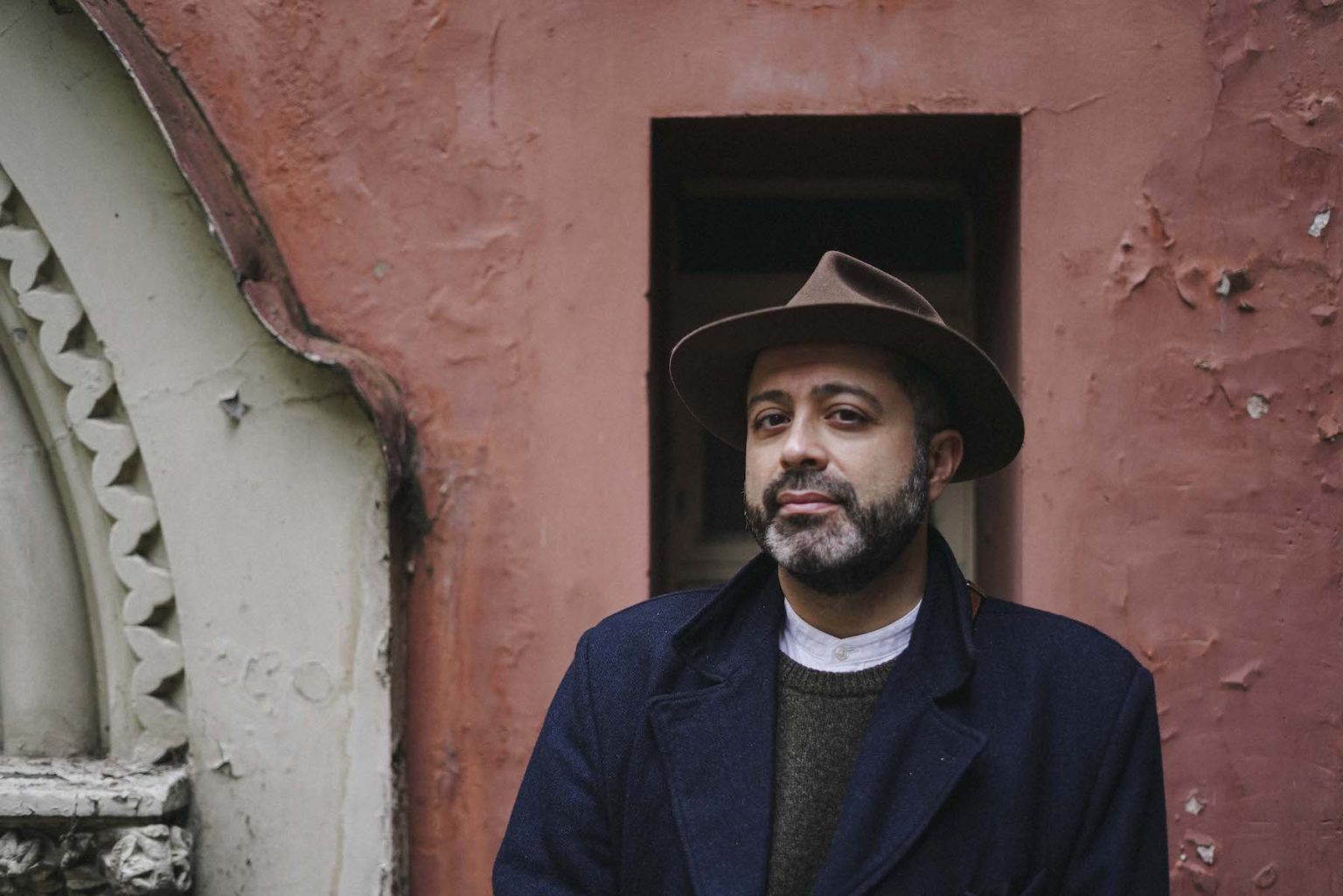
Pictured Above: Mahan Esfahani. Photo Credit: Alex Kozobolis.
Esfahani is careful to say that the composer is the true musician, and he is a “mere” player. “It’s not my business to effectuate what the composer intends. I’m fundamentally a vehicle for that. One thing that Julian, being an opera composer, has done beautifully is he’s calculated the effect of every idea. ‘Tarantella’ [the 2nd act] is a great example of how he’s been very clever with the way he repeats motifs, the comedic timing between the soloist and the orchestra—the orchestra sort of trips me up. I guess I am the protagonist tripped up by the world around him, and Julian’s done an enviably good job at that.” While composer and soloist were in communication during the writing of the concerto in 2025, Esfahani says he asked for only two minor changes and requested that Grant leave the registration, which governs the tone and volume of the harpsichord, up to him.
After the Los Angeles-based Kaleidoscope Chamber Orchestra musicians performed Viet Cuong’s percussion concerto Re(new)al, they asked him to compose another work, without any parameters. A clarinetist and flutist himself, Cuong has harbored a fascination with multiphonics, which began to be employed by classical and jazz composers in the first half of the twentieth century, but as early as the 18th century by Carl Maria von Weber. “It’s just cool to think about playing the instrument in a way that it’s not designed to. Exploring these unique sounds is like unlocking this new level of the instrument,” says Cuong.
To create multiphonics, or multiple sounds simultaneously, woodwind or brass players use incorrect fingerings to produce quirky sounds that Cuong finds whimsical. His first experimentation with multiphonics resulted in the woodwind and brass sextet Extra Fancy. For Kaleidoscope he wrote a double oboe concerto—Extra(ordinarily) Fancy—in which he aimed to use multiphonics “in a melodic way, and in a way that is inspired by Baroque music.” Lillian Copeland and Erin Gustafson are the featured oboists in this double concerto.
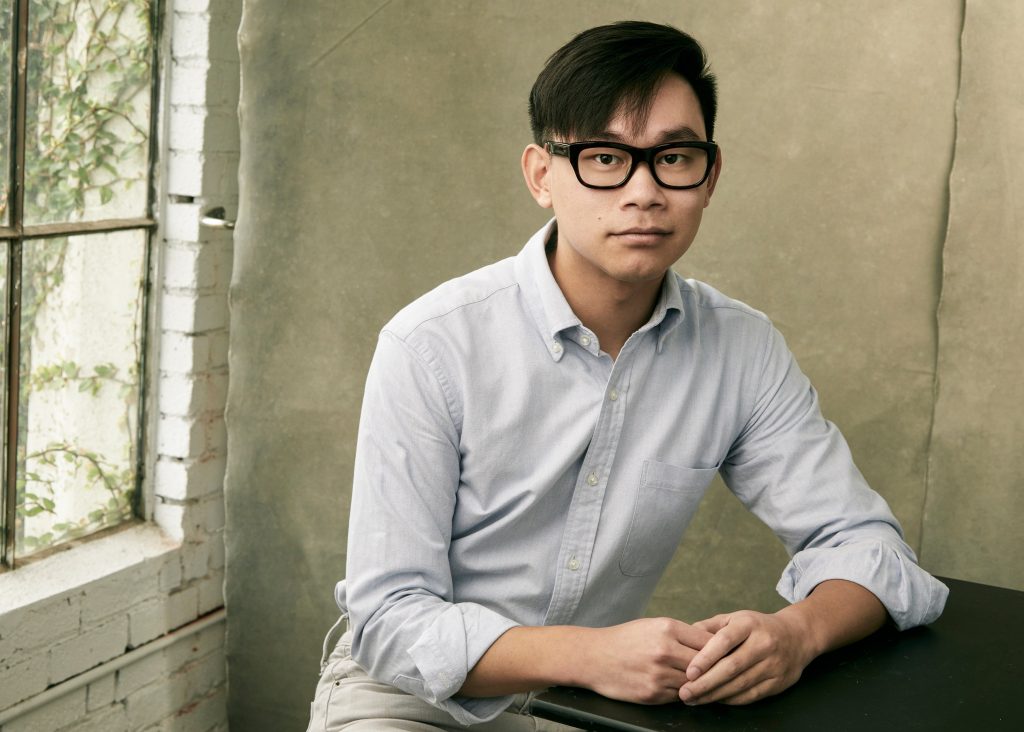
Pictured Above: Composer, Viet Cuong. Photo Credit: Aaron Jay Young.
In preparing to compose the piece, Cuong studied double oboe concertos by Albinoni, Vivaldi, and Marcello. Extra(ordinarily) Fancy “is my take on a Baroque double oboe concerto,” says Cuong. An extra dose of whimsy is his script for dueling oboes, “a battle between the modern and the Baroque. I was ironically poking fun at the idea of, in the world of contemporary music, [with one solo oboe using] extended techniques being extra fancy, and then [the other oboe] being ordinarily fancy, just wanting to sound traditional and beautiful. I got to pretend I was a Baroque composer at times battling with myself.”
There’s a hilarious moment in the concerto when the harpsichordist sounds one note over and over. Cuong says, “I think of the harpsichord as a metronome in a lesson. A teacher will turn on the metronome for tempo, the teacher will play [a passage] and ask the student to try it himself. I was trying to create this idea of a lesson gone awry. The student is being defiant, a rebel” when he adlibs with multiphonics.
Besides fulfilling a constant demand for commissioned works for woodwind and brass instruments, Cuong is a faculty member of the University of Nevada in Las Vegas, as well as composer-in-residence for the Pacific Symphony in Costa Mesa, California. When I tell him that Extra(ordinarily) Fancy will be on the same program as Vaudeville in Teal, Cuong says writing that piece “really made me love the harpsichord, and one of my dream projects in the future is to write a harpsichord concerto.”
The third work on the PSO program is Stravinsky’s Pulcinella, written for the impresario Sergei Diaghilev’s Les Ballet Russe. His choreographer Léonide Massine suggested doing a ballet based on the Pulcinella stories from the Neapolitan commedia dell’arte tradition, and the two selected a handful of pieces by the Baroque composer Giovanni Battista Pergolesi, on which they would base the score. When Manuel de Falla bowed out as a prospective composer, they called on Stravinsky.
In program notes for Argylearts.com, Chris Myers writes that Stravinsky’s changes “were significant but not fundamental…Stravinsky’s real mark was in his highly idiosyncratic orchestration…[he sought] ‘dynamism by juxtaposing the timbres of the instruments…I also look for truth in a disequilibrium of instruments, which is the opposite of the thing done in what is known as chamber music.’”
Pulcinella marked the end of Stravinsky’s “Russian period” and the beginning of his second phase, his neoclassical period. He wrote: “Pulcinella was my discovery of the past, the epiphany through which the whole of my late work became possible. It was a backward look, of course—the first of many love affairs in that direction—but it was a look in the mirror, too.”
Soprano Aubry Ballarò, tenor Nicholas Nestorak, and bass-baritone Hunter Enoch are the featured soloists for Pulcinella.
Tickets for the March 7 and 8 concerts are available at princetonsymphony.org.