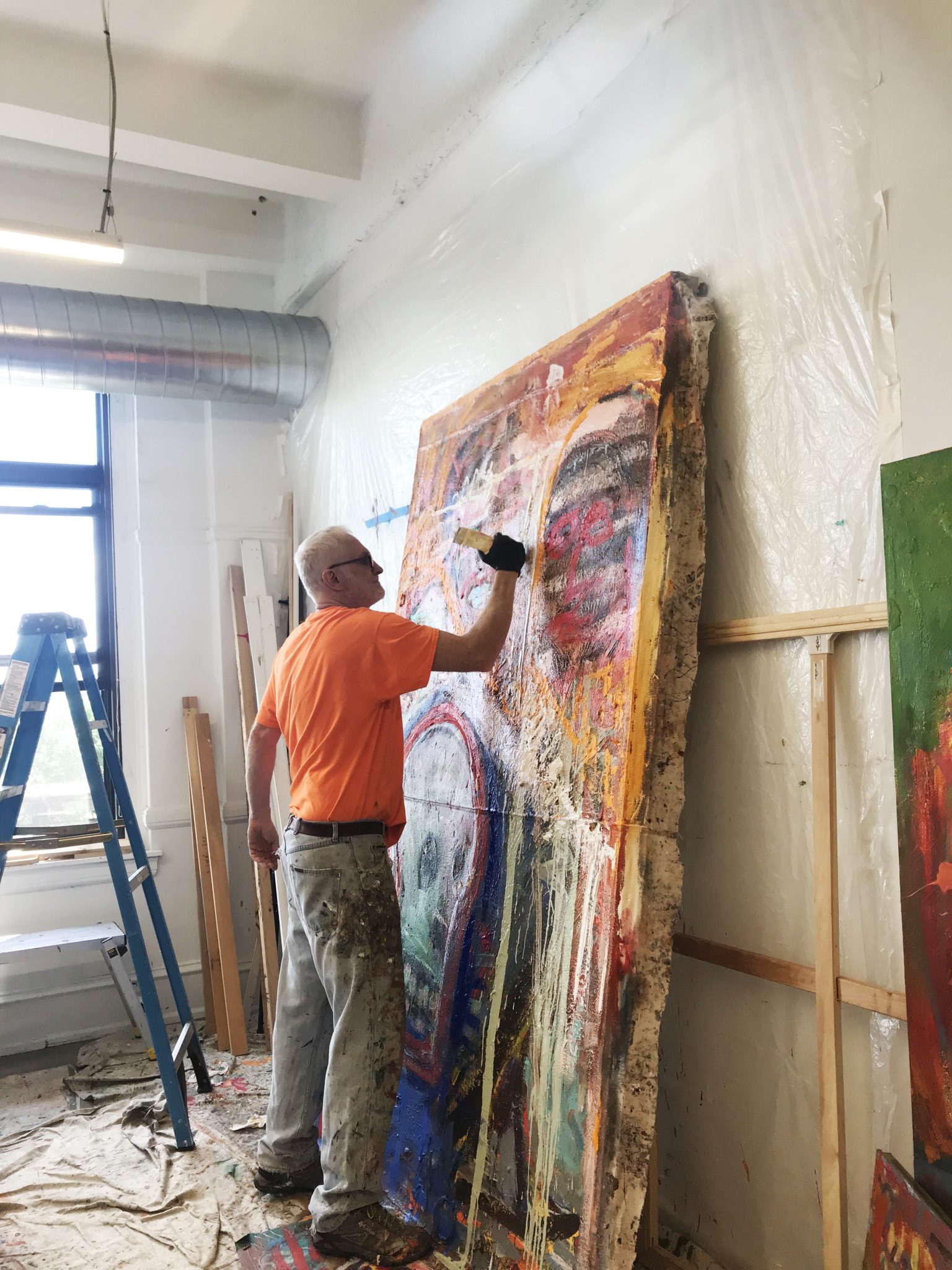
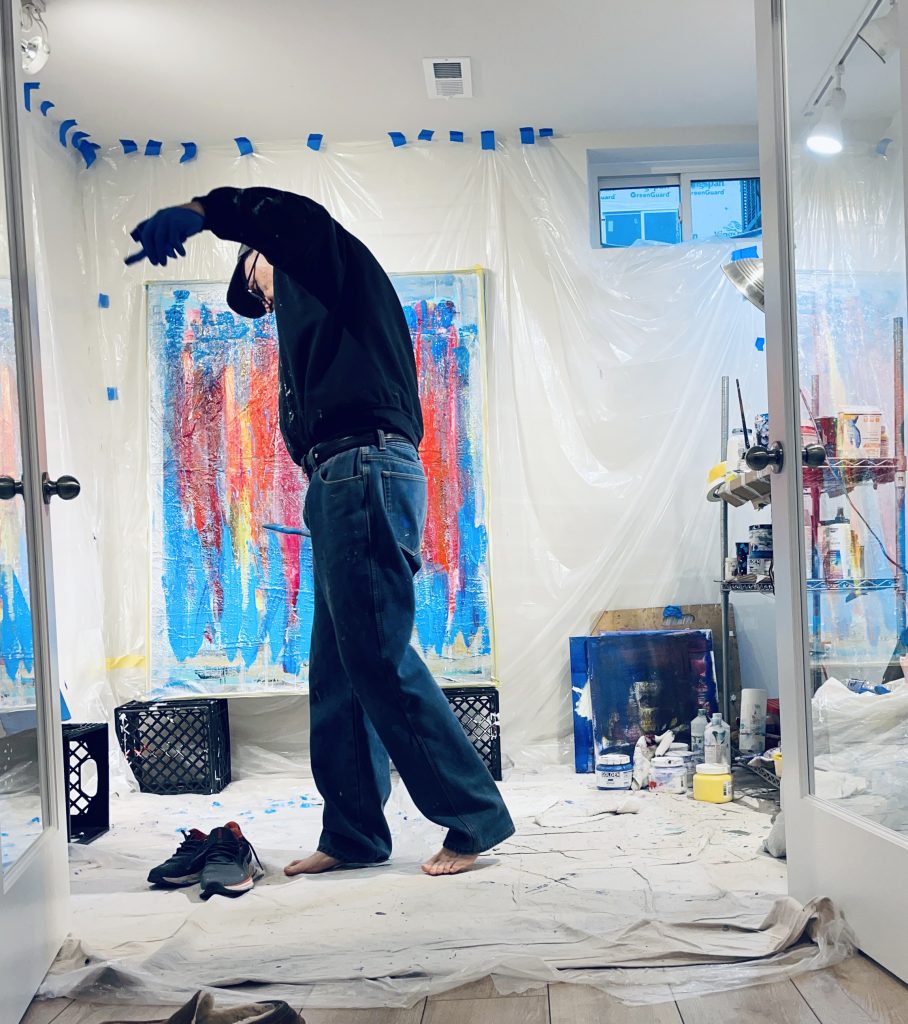
Pictured Above: Artist Gary Giordano in studio. Photo Credit: Contributed.
Gestural Painting with Artist Gary Giordano
By Artist Contributor, Gary Giordano
In a self-guided interview with Bucks County Painter Gary Giordano, the local artist shares his thoughts on Gestural Painting, its history, influence and materials
While designing several workshops on painting, my goal was to focus students on the process of painting and help them enjoy the act of creativity—to be open and free, accepting themselves as artists in that moment without any baggage of preconceived or pretentious expectations, and to explore painting in a physical way, just as in dancing when one is enjoying, accepting, and exploring the process. In doing this, I used the term Gestural Painting and prepared this essay.
Creating a painting is not merely a visual exercise. It is an act of presence—a physical declaration of being in the moment, a conversation between self and surface. In gestural abstraction, an artist uses full-body movements to make marks rather than just the hand or wrist. The body acts as a tool of memory, resistance, intuition, and release. The artist tends to resist fixed representation, guided instead by emotion and the unpredictability of the moment. The process may begin with a feeling or concept, but to stay true, it must remain open to veering off course. Growth depends on letting go—allowing the act of creation to become a dance between intention and intuition.
Historically, gestural painting grew from midcentury Abstract Expressionism. Painters like Jackson Pollock, who threw or dripped paint, or Joan Mitchell with her broad gestures, and Mark Rothko and Barnett Newman with large brush strokes. A whole school of artists evolved who rejected traditional methods, pushing back against academic approaches and expressing emotion and industrialized society. Then the art world shifted to Pop and Minimalism and so on. Once again, in Brooklyn, many artists are exploring and revisiting this approach but adding new ideas and materials and furthering this conversation which began in New York.
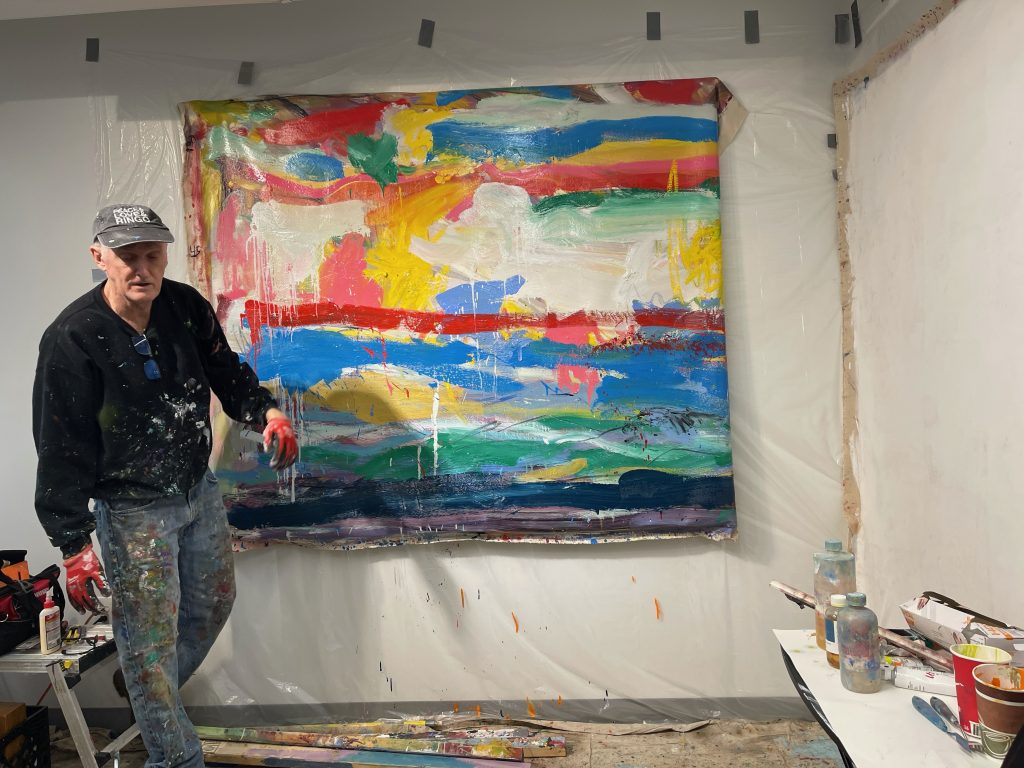
Pictured Above: Artist Gary Giordano in studio. Photo Credit: Contributed.
This has greatly influenced my studio practice, using physical gesture and large scale to express but also engage the viewer in a direct relationship. Influenced by my contemporary peers, I now incorporate text and allow rendering because it adds to the piece, and rules of non- representation no longer matter. Texture isn’t just hatching or the way marks are created; it is something which comes off the surface. Rhythm comes from the body moving and feeling or dancing or channeling rhythms of the universe which are transferred to the surface. Motion and the subconscious inform the work. I approach the canvas as a blank page to express oneself, environment, and emotional energy. A painting should contain as much information as a novel—but all on one surface.
Gestural Painting demands emotional and physical commitment. It becomes a life practice, not a career tactic. The body becomes the expressive instrument—hands, arms, shoulders, even breath. Clarity and resilience come from embracing the truth of one’s personal path. To stay authentic means releasing the need for external validation and trusting the mark itself.
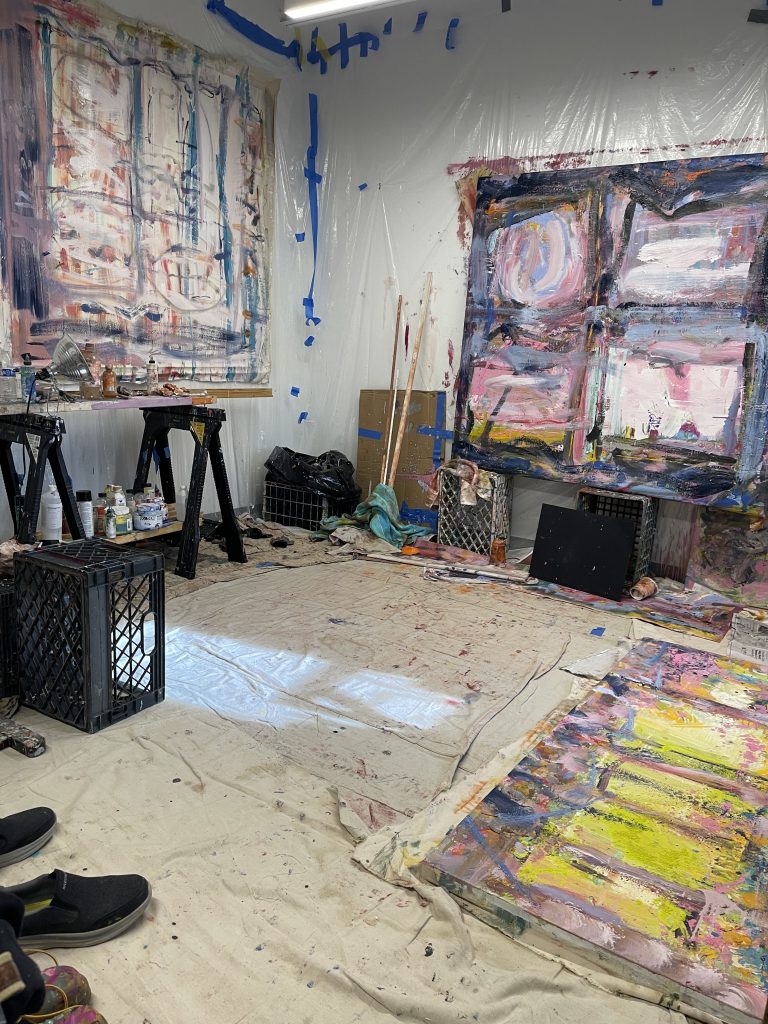
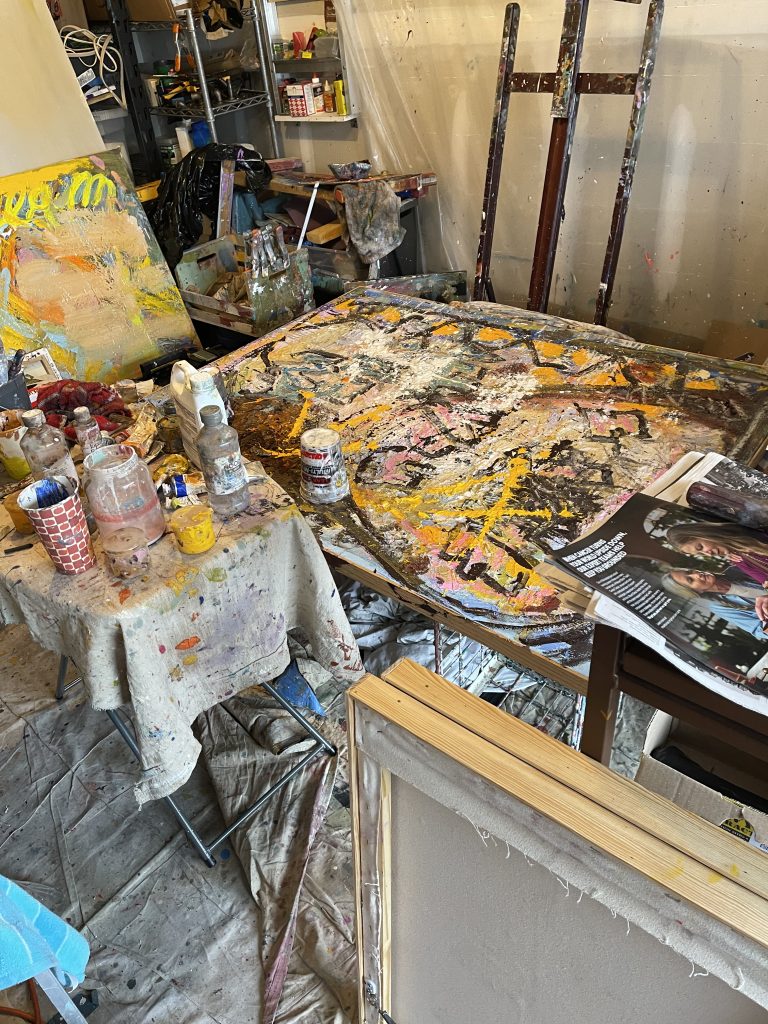
Pictured Above: Gary Giordano’s studio space. Photo Credit: Contributed.
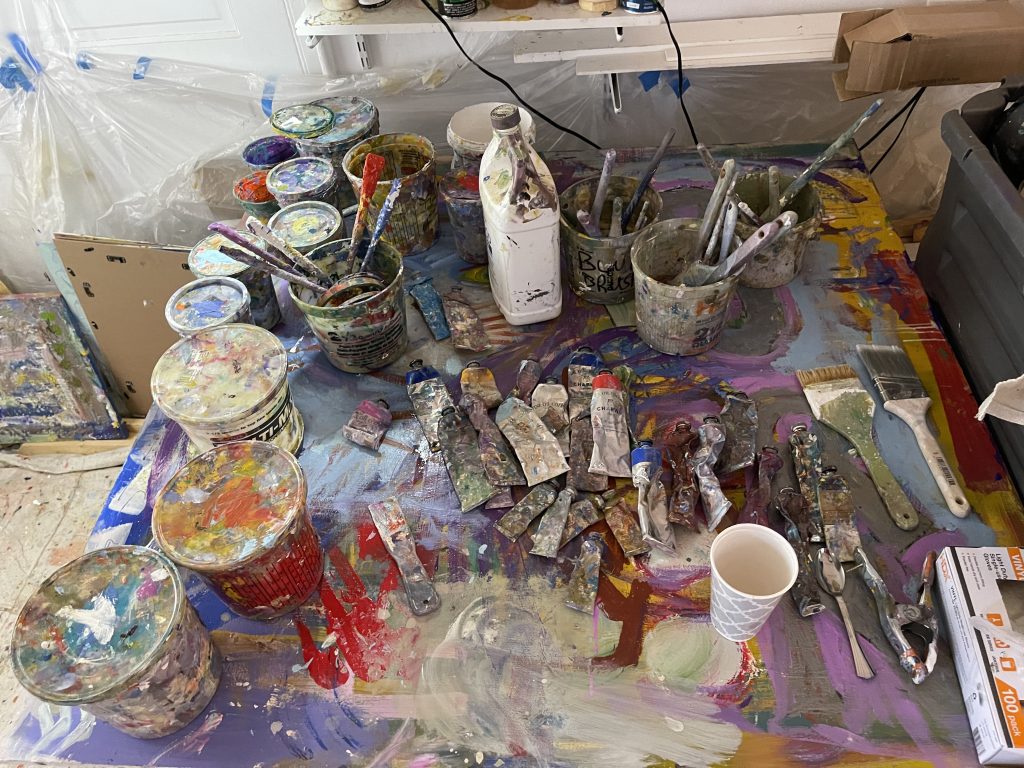
Materials are collaborators: pigment, stand oil, enamel, acrylic, fabric scraps, and metal, weight and energy. Old drop cloths become memory maps. And scale matters—because scale relates to the body. A larger surface demands surrender.
Core visual elements—color, texture, line, shape, form, and scale—shape the emotional terrain of a painting. But technical mastery is also essential. High-quality pigments and durable surfaces help ensure the work’s longevity. Even within spontaneity, craftsmanship remains central.
The challenges in this practice are as layered as the paintings themselves. Investing in materials and studio space requires ongoing personal sacrifice. Internally, artists wrestle with ego, insecurity, and distraction—emotional roadblocks that can cloud creative momentum. Maintaining meaningful relationships while navigating the studio headspace demands patience and honesty. Yet through all these tensions, the act of painting continues to evolve. It offers a space to breathe, reflect, and become.
Pictured Above: Gary Giordano’s materials. Photo Credit: Contributed.
I ask my students to embrace destruction—not out of nihilism, but necessity. The unintentional is where growth lives. A broken composition might hold more truth than a polished one. Sometimes dancing is appropriate. And sometimes a ruined image is the only way forward.
My influences stretch from the textures of Philadelphia and Bushwick—brick, wire, graffiti layers—to The Lehigh Valley landscapes and the studio. In each space, painting becomes an event. You don’t just make it—you enter it. Gesture invites proximity. It pulls the viewer close before they know why.
Ultimately, the gestural act is about trust. Trust the body. Trust the mark. Let it lead. The painting will live—if you allow it.
Pictured Above: Gary Giordano in studio. Photo Credit: Contributed.
For more information on Gary’s work, see the contact information below.
• Email: Gallerygarygiordano@gmail.com
• Website: Gary Giordano Artist
• Social Media: Instagram
Pictured Above: Gary Giordano’s studio. Photo Credit: Contributed.

Independent Arts News Reporting